Product
/
September 2026
How Do Hearing Aids Work?
For years, the routine looked the same: peel the tab off a tiny battery, open the battery door, and hope the new one lasts through the weekend. Many people know the moment a hearing aid fades mid-conversation and sends them searching a pocket or purse for a spare.
Rechargeable hearing aids replace that routine with a simpler one. You place them in their charger before bed, and they are ready in the morning. Charging takes less time than most people expect, and a few habits keep battery life predictable.
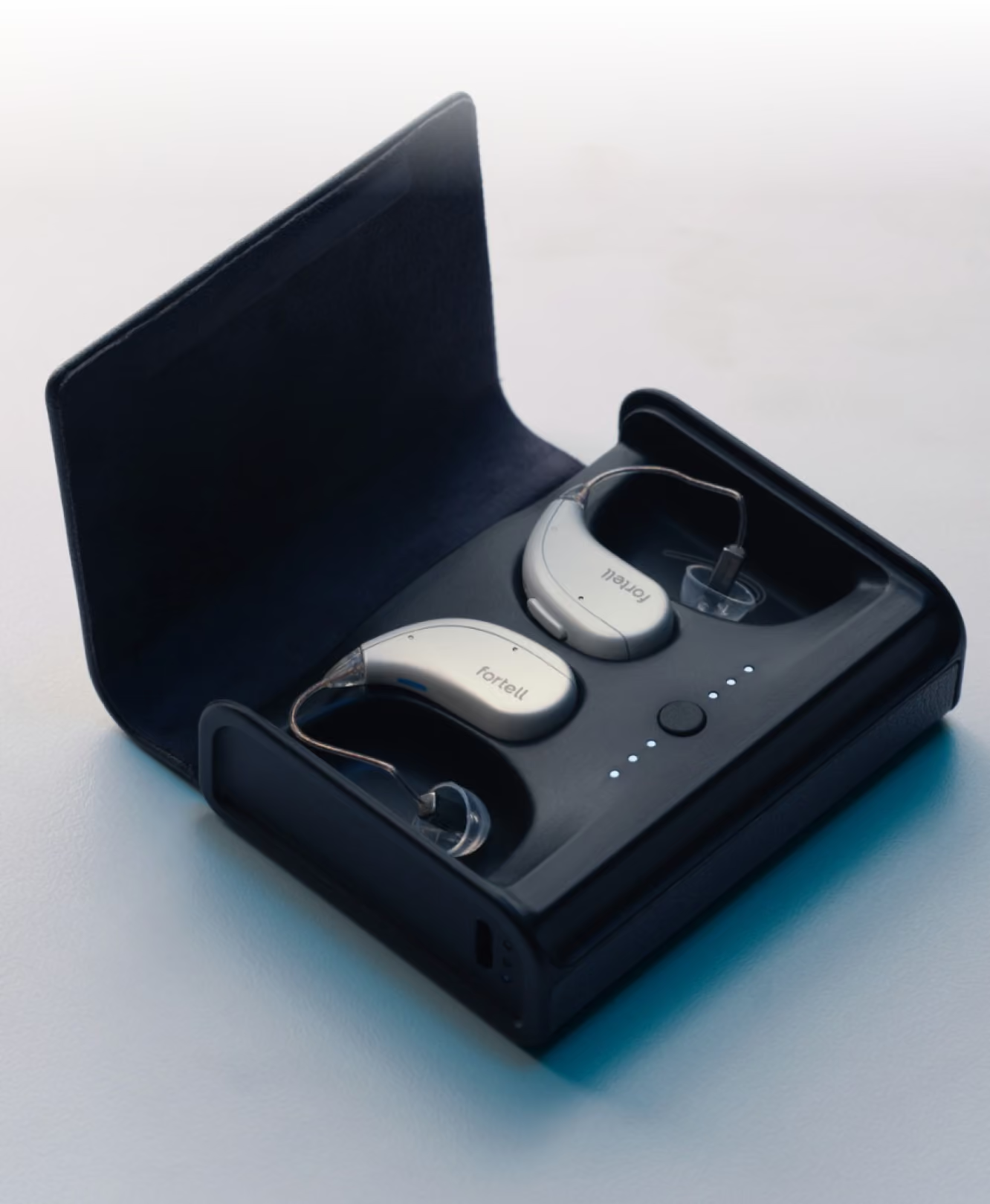
Most rechargeable hearing aids take about 2–4 hours to charge fully from empty, depending on the model. For example, when fully drained, Fortell AI Hearing aids charge in about 150 minutes (2.5 hours). Because a hearing aid can fully charge while you’re sleeping, the simplest habit is to charge them every night and wear them all day.
How long hearing aids take to charge can change a little from one night to the next, even for the same pair depending on a few factors:
Most modern rechargeable hearing aids use lithium-ion batteries, the same type found in phones, and even a short charge adds useful listening time. The table below shows Fortell’s published figures for Fortell AI Hearing Aids, starting from a fully drained battery:
In practice, a 30-minute top-up while you shower and get dressed can cover an afternoon and evening out. Actual battery life varies with how you use your hearing aids, which features are active, your degree of hearing loss, how loud your surroundings are, and the age of the battery.
A full charge typically carries a rechargeable hearing aid through a full day of normal wear, from morning until you put it back in the charger at night. Rechargeable hearing aid battery life depends on the model and on how you spend your day.
Some features use more power than everyday listening. Streaming phone calls, music, or TV audio over Bluetooth keeps the wireless radio busy. Listening to an Auracast broadcast, the public audio streams some theaters, airports, and venues now offer, does the same. On many hearing aids, stronger noise processing in loud places also draws extra power. A day with hours of streaming may end with less battery left than a quiet day at home.
Fortell AI Hearing Aids provide 24+ hours of continuous listening in All-day AI mode on a full charge, and with the portable charging case, you get 72+ hours of listening away from an outlet.
{{banner_comparing}}
The lithium-ion battery inside a rechargeable hearing aid is built into the device, and it usually lasts about three to five years before its capacity drops noticeably. Like a phone battery, it slowly holds less charge as it ages.
“On many hearing aids, stronger noise processing in loud places also draws extra power.”
The clearest sign of an aging battery is a shorter day: hearing aids that used to last until bedtime now need a top-up by evening, even though your routine has not changed. Because the battery is sealed inside the hearing aid, you cannot replace it at home; a hearing care professional or the manufacturer will handle battery service. Fortell hearing aids use a non-removable lithium-ion battery. If they no longer last a full day on a full charge, contact Fortell. Every purchase includes a 3-year comprehensive warranty. To understand how long the hearing aid itself lasts, read our guide on how long hearing aids last.
Most hearing aid chargers work the same basic way. Below is how Fortell charger works:
Indicator lights differ from brand to brand, so your hearing aid’s manual is always the final word. As an example, these are the charging status lights Fortell’s case shows when the hearing aids are in their ports and the lid is open:
A pulsing light always means charging is in progress. A red signal is rarely serious: in most cases, you only need to dry the hearing aid or set it back in its port. The case’s own battery level appears on a separate set of lights beside its USB-C port.
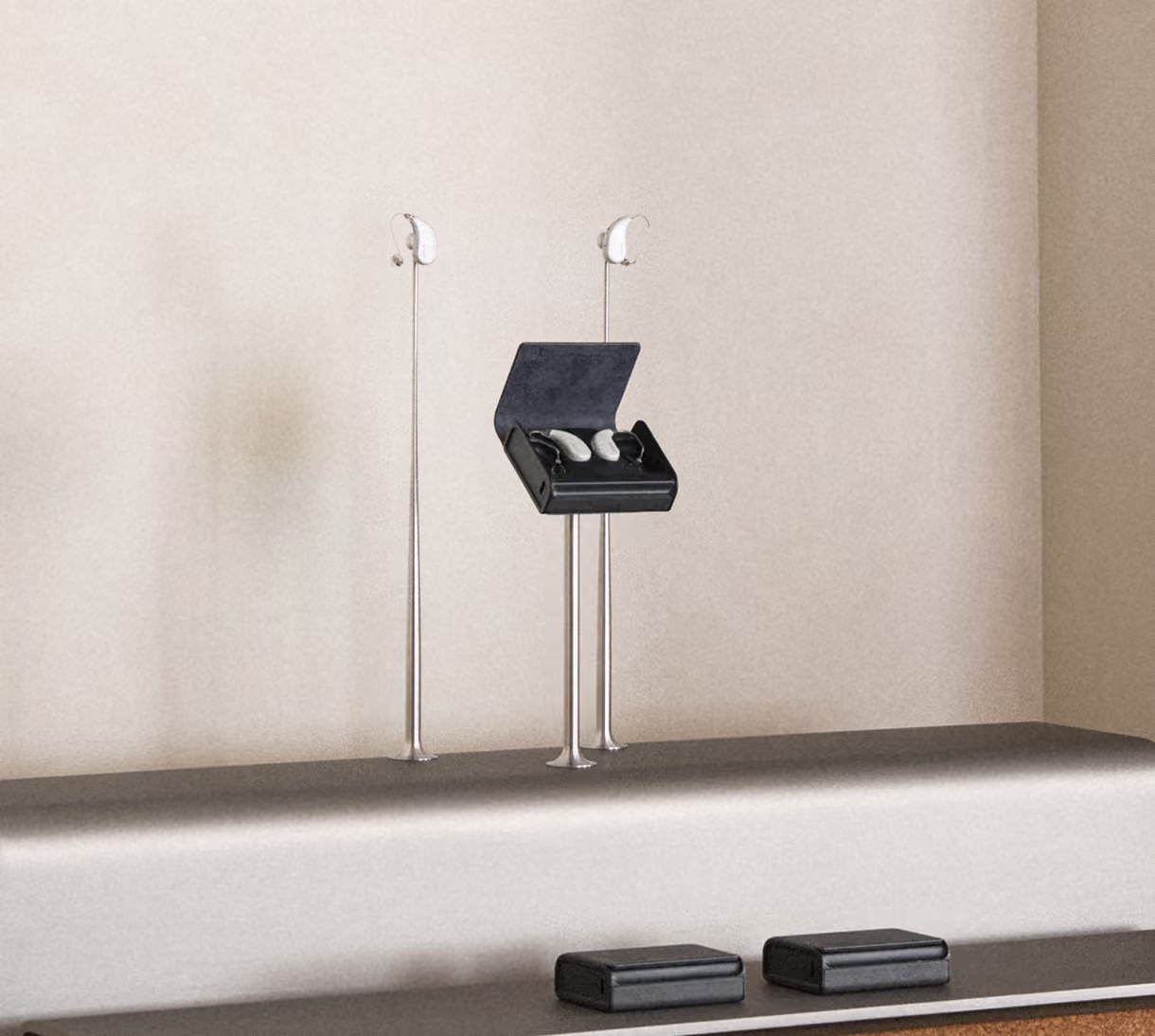
A long travel day, a weekend away, or a power outage can leave you far from a wall outlet. Many rechargeable hearing aids come with a portable charging case that has a built-in power bank, so the case itself carries enough stored energy to recharge your hearing aids without being plugged in.
Fortell’s charging case has a built-in lithium-ion power bank that recharges a pair of hearing aids up to three times. When you plug it in, the case itself fully recharges in about 8 hours, with or without the hearing aids inside.
A few steps to prepare the charging case before a trip:
Before you put your Fortell hearing aids in the case, make sure the case is plugged in or has charge left. If the case has no power, the hearing aids stay on and keep using their own batteries.
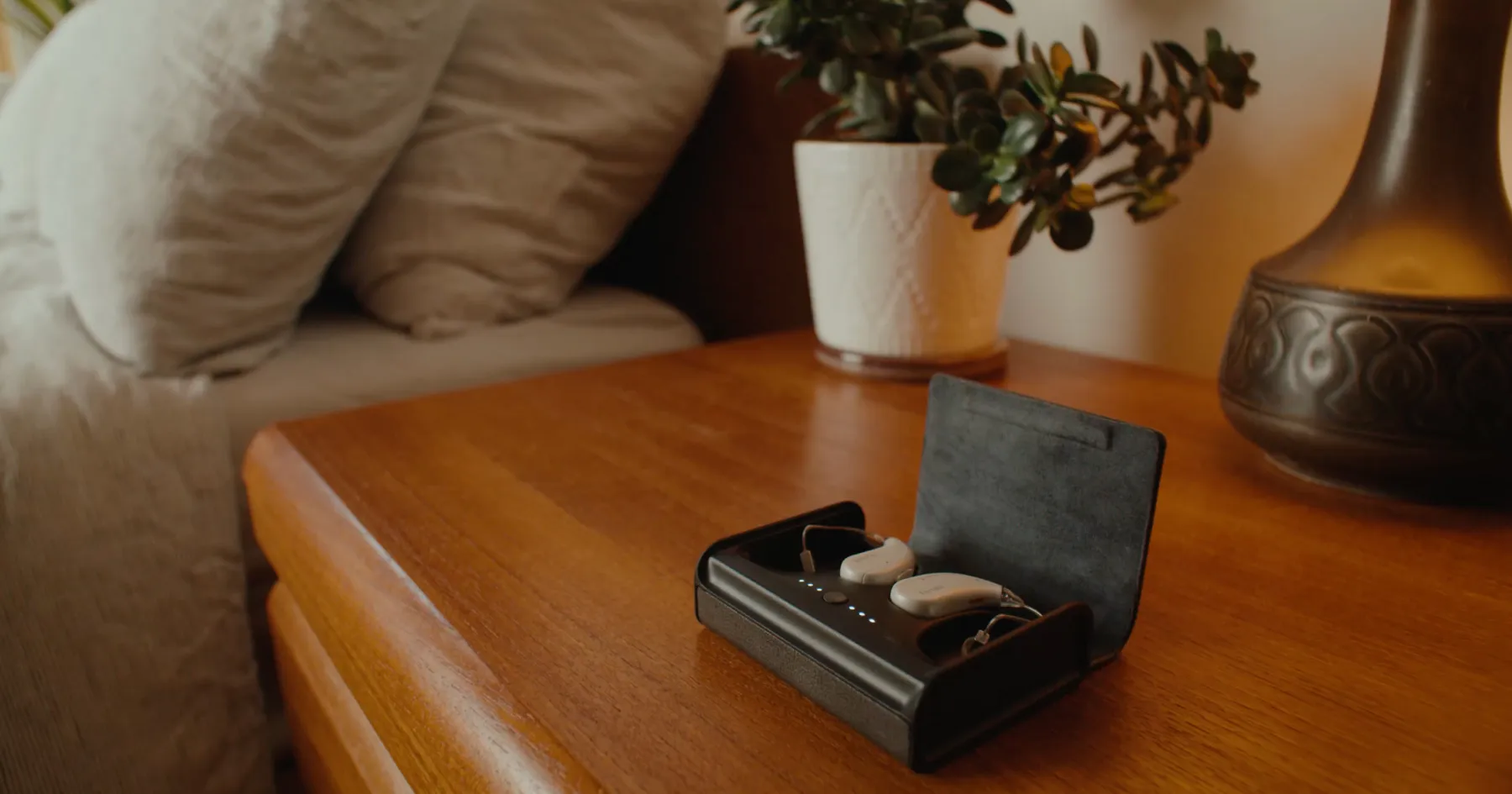
These habits keep your battery life predictable each day and help the battery hold its capacity over the years:
“Charge every night, even if the battery isn’t empty. Letting a lithium-ion battery drain completely can shorten its overall lifespan.”
If you notice your hearing aids not charging, work through this checklist from the simplest fix to the most involved:
Most charging hiccups come down to seating, moisture, or power, not a failed battery.
If your current hearing aids use disposable batteries, the switch to rechargeable hearing aids changes your daily routine more than anything else. The table compares the two systems:
Earlier rechargeable hearing aids often used batteries that sat behind a battery door and needed replacing about once a year. Today’s lithium-ion designs seal the battery inside the hearing aid, so there’s no battery door to open and no battery to swap out.
For people with arthritis or limited dexterity, rechargeable hearing aids remove the hardest part of the routine: handling tiny batteries every few days. They also cut down on the steady stream of used batteries that need safe disposal. Disposable batteries still suit some people, though. If you prefer not to depend on a charger, or you often spend days away from power, a spare pack of batteries can feel more reassuring.
{{banner_living}}
With Fortell, charging is built to fade into the background of your day. Fortell AI Hearing Aids deliver 24+ hours of listening in All-day AI mode on a full charge, and the portable case holds three extra charges for 72+ hours away from an outlet.
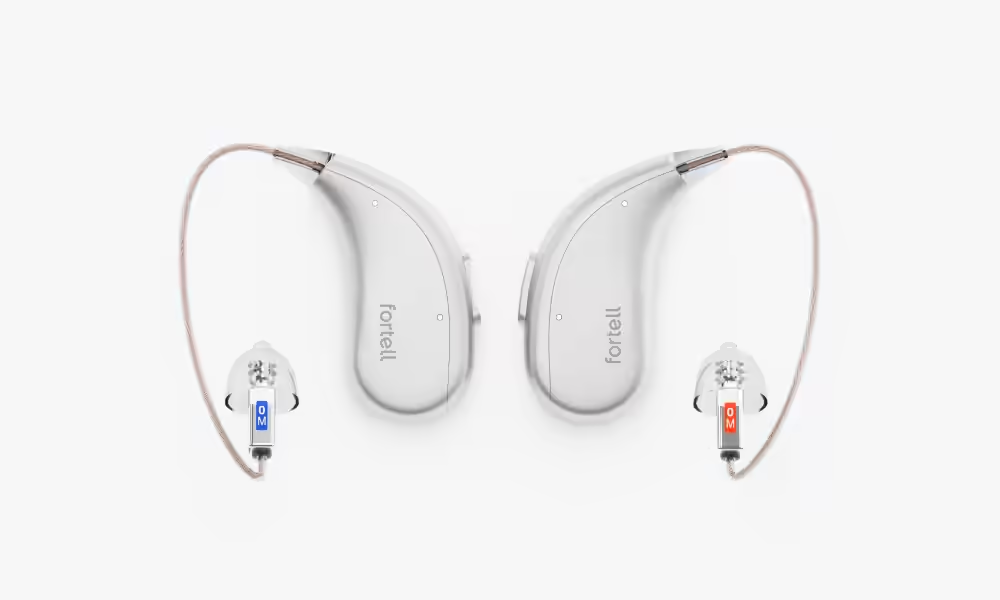
The charging case also makes charging intuitive and simple. Blue and red ports match the left and right hearing aids, the hearing aids switch on when you lift them out and switch off when you set them in a charged or plugged-in case, and the status lights show the battery level at a glance.
It takes about 2.5 hours to fully-charge your hearing aids from empty.Three descending tones give you about two hours of warning before the battery runs out.
Fortell AI Hearing Aids are for prescription use by adults with hearing loss and available in the U.S. only.
Charging rechargeable hearing aids comes down to a few simple points: a full charge takes a few hours, a quick top-up covers you on short notice, the indicator lights tell you where things stand, and charging every night keeps battery life predictable. Once the routine settles in, you stop thinking about power and simply wear your hearing aids.
If you are considering rechargeable hearing aids, a hearing evaluation is a low-pressure first step. Take Fortell’s eligibility quiz to book an evaluation with a Fortell audiologist, or find a Fortell Audiology location near you.


No. Modern rechargeable hearing aids with lithium-ion batteries are designed to stop charging automatically once the battery is full, so they don’t overcharge under normal use. That makes it safe to leave them in the charger overnight. Use only the charger, cable, and adapter that came with your hearing aids, and contact your audiologist if the charger or hearing aids ever feel unusually hot.
Yes. Charging your hearing aids every night, even when the battery isn’t empty, gives you a full charge each morning and keeps the battery from draining completely. Most rechargeable hearing aids are designed for nightly charging. Fortell’s Instructions for Use recommend recharging every night so your hearing aids are ready for a full day.
Yes. Leaving your hearing aid charger plugged into the wall is fine, and it keeps the charger ready for your hearing aids every night. A plugged-in charger is also the safest place to store hearing aids, because an unplugged charger can’t top them up. With Fortell, keep the case plugged in when storing your hearing aids for more than 14 days, and unplug the cable before you travel with the case.
The 5-minute rule applies only to disposable zinc-air hearing aid batteries (not rechargeable ones). It suggests waiting after peeling off the tab so air can activate the battery; however, manufacturer guidance from EHIMA recommends waiting just one minute.