How Fortell Helped Howard Show Up for Life Again
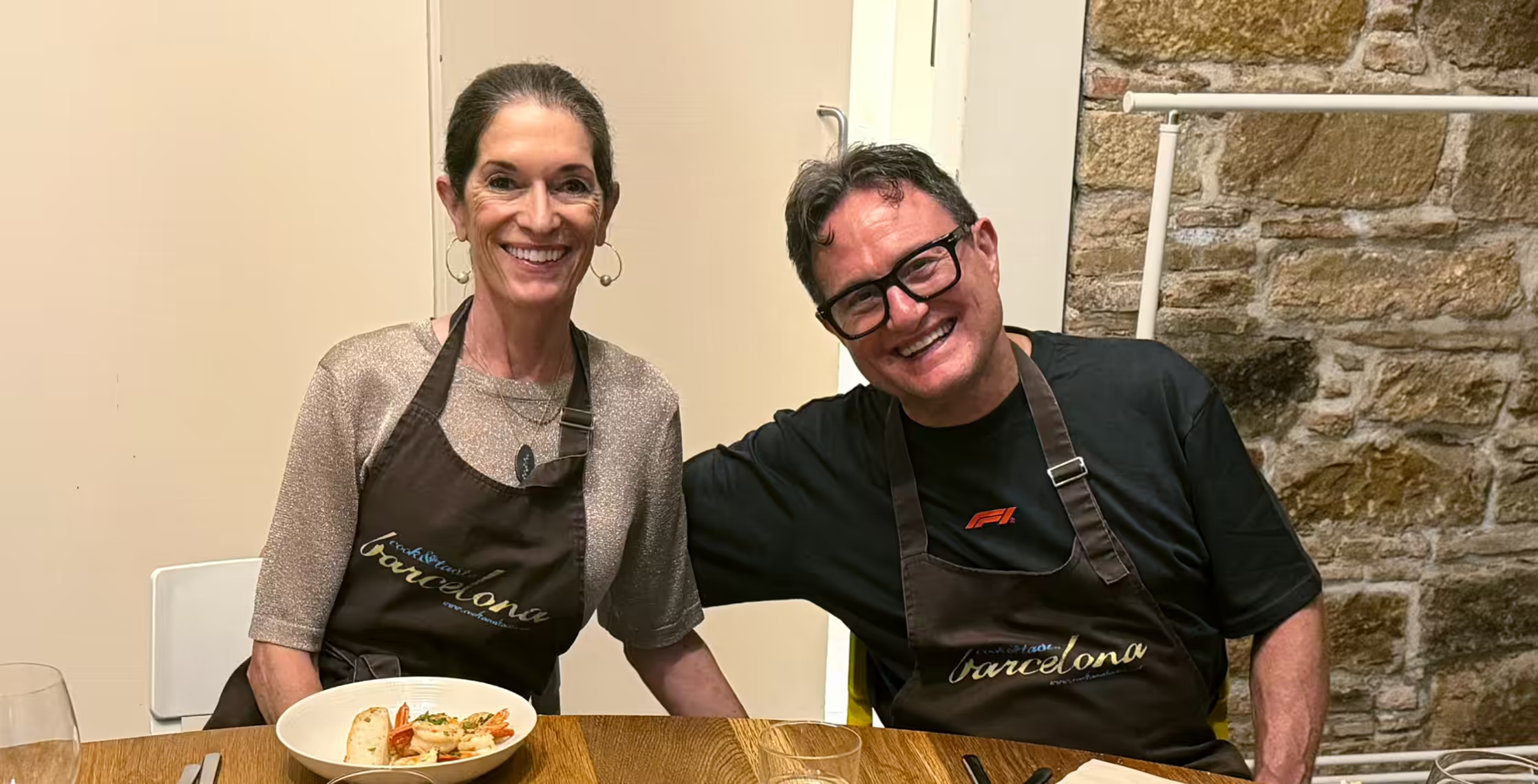
Howard has always been someone who moves toward life, not away from it. A southerner by upbringing, he eventually made his way through grad school in Boston, stints in California and Connecticut, and ultimately settled full-time in Stowe, Vermont, drawn by the mountains, the trails, and room enough for a family of seven to spread out.
But somewhere along the way, hearing loss started quietly closing doors he didn't even notice were shutting.
A slow withdrawal from the activities and people he loves
Howard's hearing history began at an early age. As a young man hunting with his father, he suffered an injury that damaged one ear. He could still hear, well enough he thought, and life went on. It wasn't until years later, after a virus affected his other ear, that testing revealed just how much damage the original injury had left behind. What he thought was manageable had been quietly compounding for decades.
For fifteen years, he tried several different hearing aids. Each hearing aid he tried seemed to bring new maintenance and audio challenges. "Nothing seemed to be worth the trouble," he said. He wore them less and less and then usually never at all.
Meanwhile, the workarounds multiplied. His wife learned to sit on his left side at movies and events if they wanted to talk to each other. During a snowboarding day, his son coordinated a meetup and Howard ended up in the wrong place because the noise had made it impossible for him to catch the right location. In conference rooms with glass walls, he was lost. At loud gatherings, he'd either ask people to repeat themselves or pretend he'd heard.
His wife is outgoing. Social situations had always been something they moved through together. But over the years, Howard found himself pulling back. "I started to feel like a nuisance," he said.
The breakthrough appointment
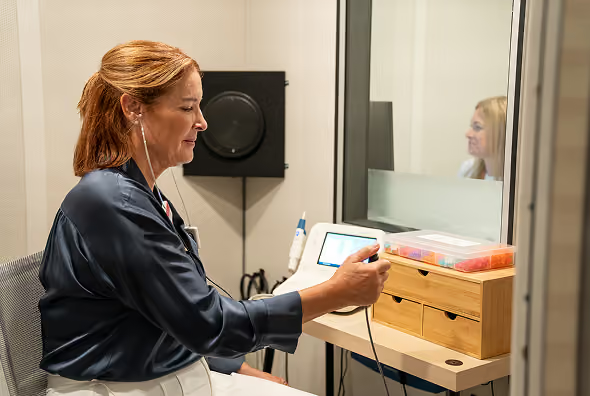
Howard came across Fortell in Wired. He did his research, asked around, and booked an appointment for a time he’d be in New York City.
The first appointment confirmed what he had hoped from his initial research: Fortell was different. But it was different in ways he didn’t expect. "The audiologist asked me about my life and really cared," he said. The questions weren't clinical. They were about him: his challenges, his family, what he was missing, what he wanted back. It was the first time a hearing care experience had felt personal.
"My outlook on life is a lot more optimistic. It’s been a phenomenal life-changing experience for me.”
Then he put the Fortell AI Hearing Aids in and stepped outside for the demo with his audiologist. Sounds he had forgotten about were there again: footsteps behind him, sirens in the distance, the ordinary sounds of a city street. "I said to my wife 'this is incredible.'" Not because sounds were simply amplified, but because the world had dimension again.
Back in the middle of things
Once Howard returned home, he found his Fortell AI Hearing Aids became essential to his day-to-day life. He didn’t go a day without wearing them and as a result, he started sleeping better too. “I find myself more rested. I think it’s because I’m less exhausted from being stressed throughout the day from trying to hear things,” he said.
His wife no longer has to choreograph where she sits during outings and he was even able to attend a Formula 1 race and actually hear the people around him over the roar of the racetrack.
For Howard, the technology is remarkable, but what he comes back to is something harder to manufacture: the sense that the people at Fortell are genuinely interested in him. He wants to come into the clinic. Not because he has to, but because he looks forward to it.
"My outlook on life is a lot more optimistic," he said. "It’s been a phenomenal life-changing experience for me.”