Spatial AI Consistently Preferred to State of the Art Hearing Aids in Multitalker Noise
We’re on a mission to radically improve hearing technology
Breakthrough innovation depends on high integrity scientific research.


Our research interests
Understanding speech in noise
We study word recognition across complex multi-speaker environments.
Performance in real-world noise
We evaluate Fortell in everyday noise scenarios like restaurants and streets.
Reduced listening effort
We measure subjective inputs to ensure wearers love our products.
Our commitment to quality research
Studying hearing is complex, and we don’t cut corners. Fortell clinical trials follow gold-standard research practices.
- 01
Blinded, randomized study designs to ensure unbiased results
- 02
Collaboration with outside academics to uphold the highest standards
- 03
Real-world listening scenarios to verify results in everyday conditions
- 04
Controlled lab environments to ensure precision and repeatability
Our research findings
Clinically measured
Fortell’s Spatial AI reduces distracting noise
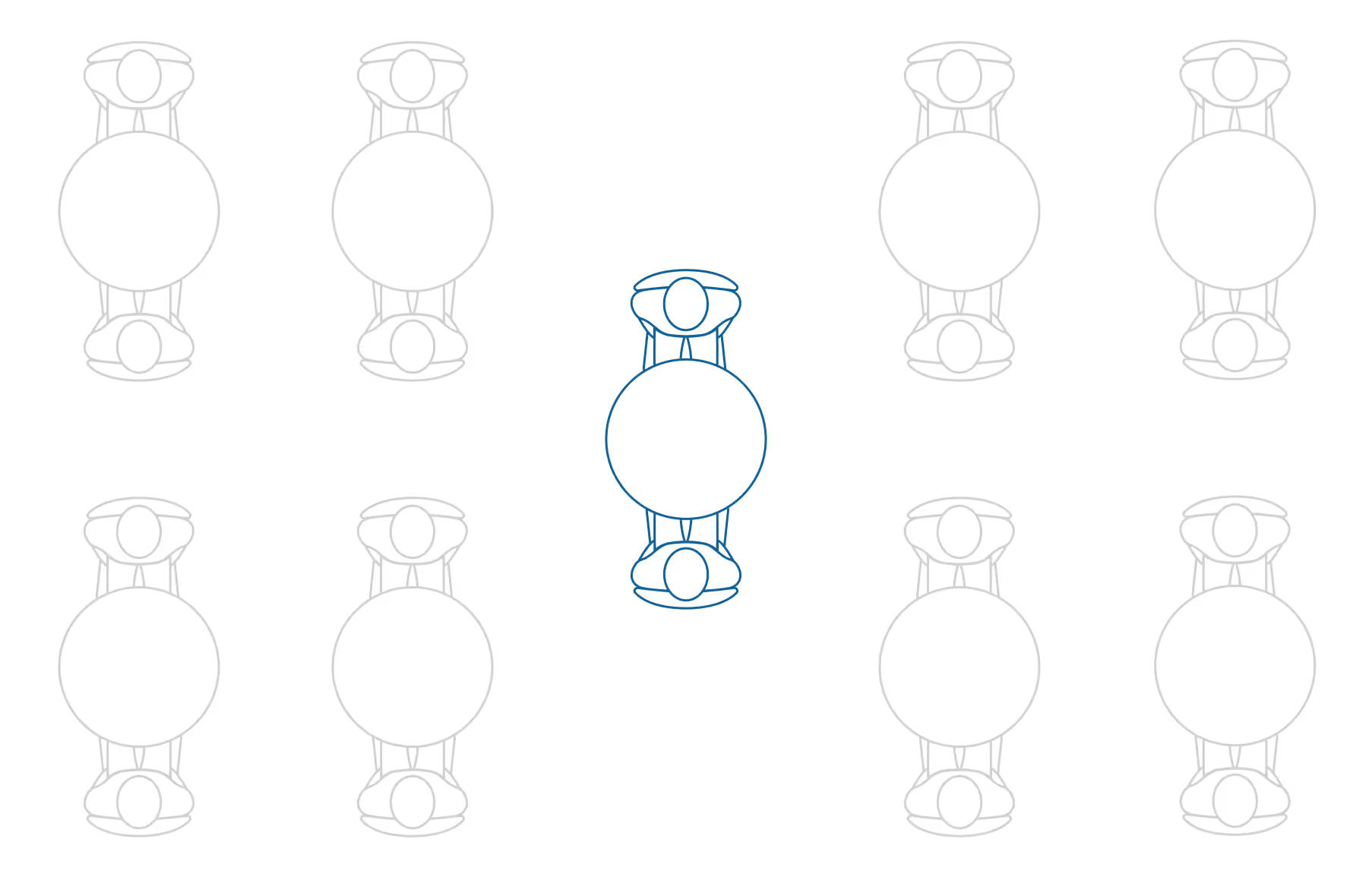
Spatial AI uses an array of synchronized microphones and advanced directional processing to map your surroundings. It isolates the human voice while softening distracting sounds, mimicking the way a healthy brain naturally filters noise.
Up to
98%
of background noise eliminated1
Proven in controlled studies
Signal-to-noise improvements enhance speech understanding
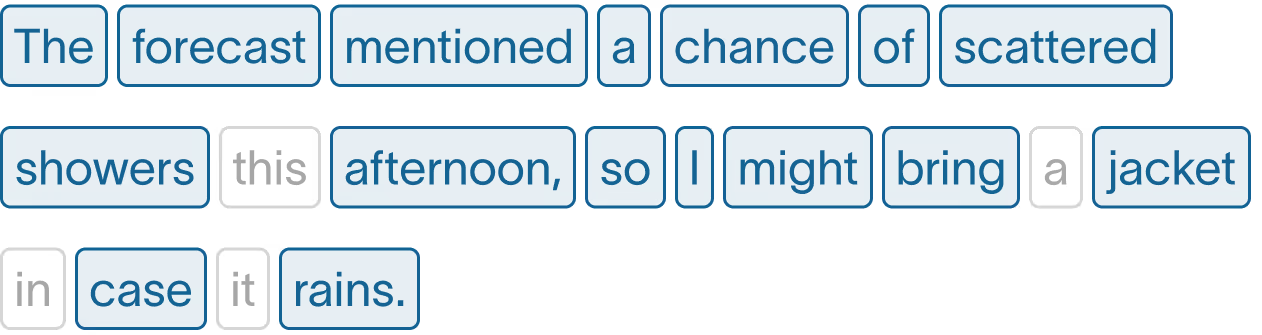
Our sound-processing technology uses AI to identify the voices that matter (the signal) and suppress unwanted sounds (noise) in near real-time.
50x
clearer speech via a 17 dB improvement in signal-to-noise ratio
Speech
Noise
Fortell
17 dB SNR
Speech is much louder than noise, making speech easier to understand
Control
1.9 dB SNR
Speech and noise are nearly the same volume, making speech difficult to understand
Why this matters
When the person you want to hear is barely louder than the laughter, clanking dishes, and bustling waiters around you at a restaurant, it’s nearly impossible to understand what they are saying. Fortell makes speech significantly louder than background noise so you can follow the conversation again.
Fortell makes conversations easier to follow
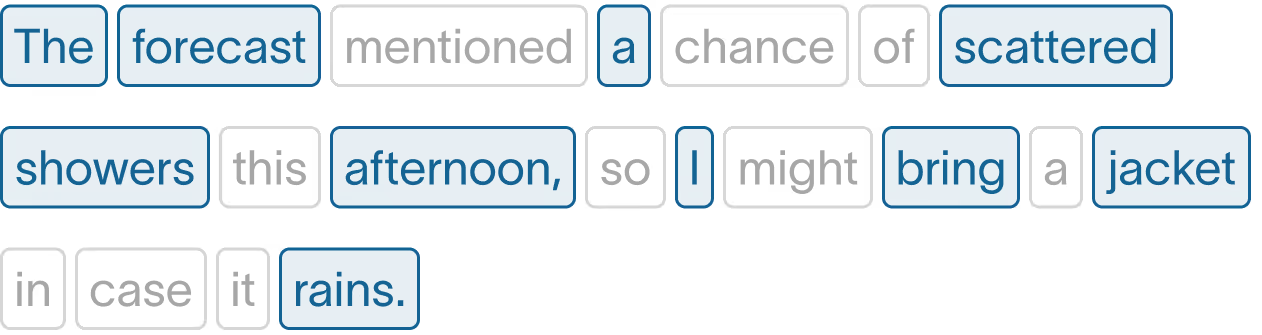
80%
Words understood with Fortell

31%
of words understood with Control
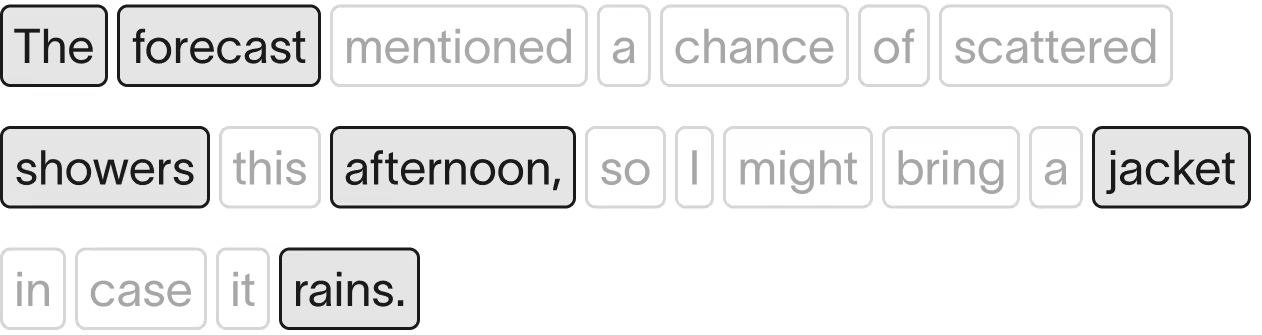

50%
of words understood with Fortell
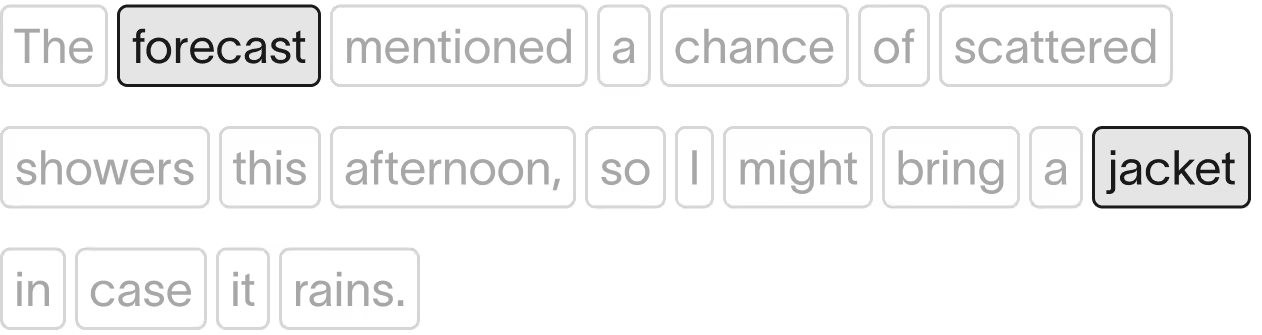
7%
of words understood with Control

Clinically validated
Wearers prefer Fortell over competitors
Objective metrics—such as signal-to-noise ratios—can indicate that speech is clearer or background noise is reduced. However, the subjective listening experience is equally critical. Subtle audio qualities and spatial perception all shape how a listener perceives sound.
95%
of participants indicated easier understanding with Fortell versus all top five competitors2

Our advisors
Our external research advisors bring deep expertise across audiology, hearing science, and patient advocacy. They work closely with our internal team to shape study design, strengthen interpretation, and ensure our research meets a high standard of evidence.
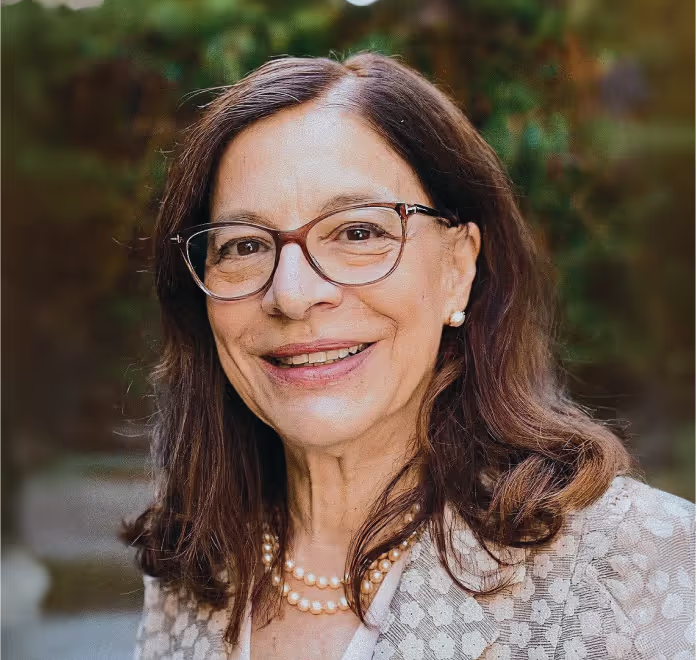
Dr. Jan Blustein, MD, PhD
NYU Langone

Dr. Kevin Franck, PhD
Former Harvard Medical School
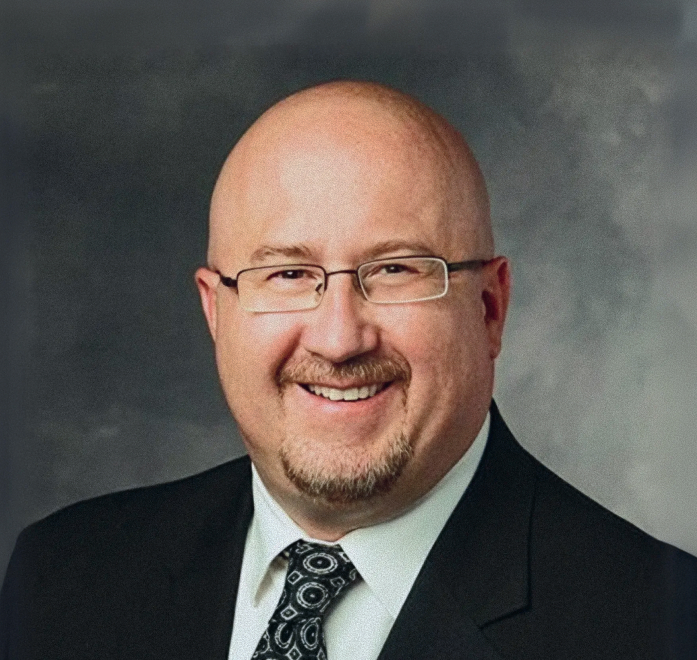
Dr. Matt Fitzgerald, PhD
Stanford University
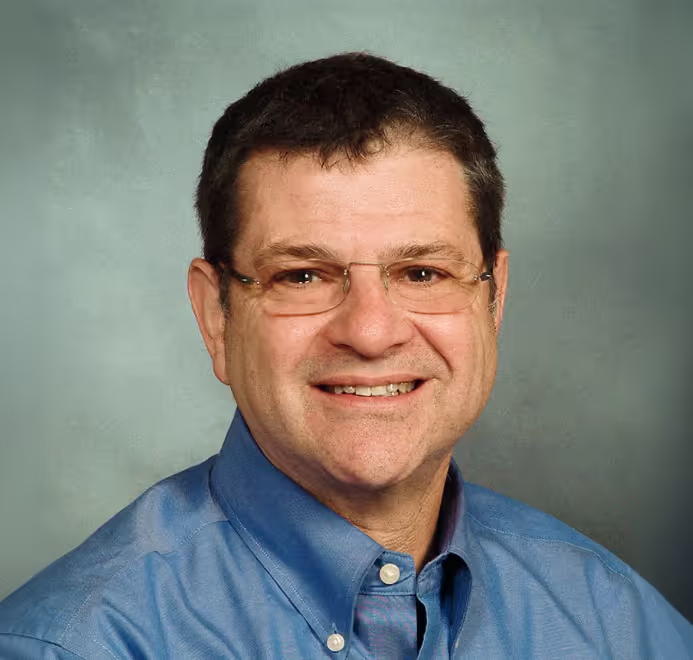
Dr. Joseph Montano, EdD
Weill Cornell
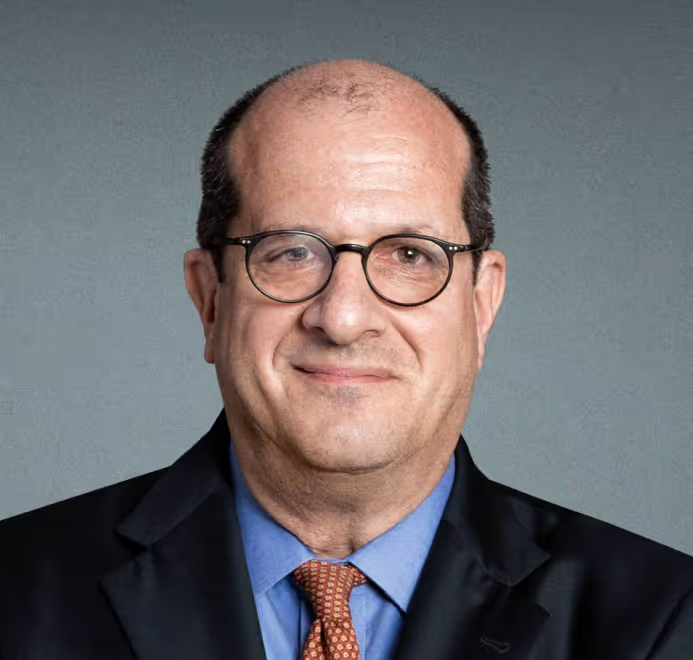
Dr. William Shapiro, AuD
NYU Langone
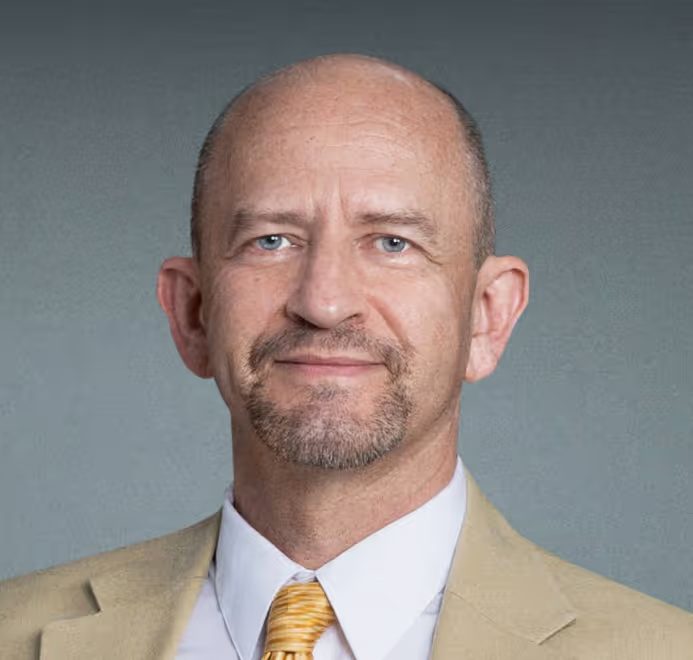
Dr. Mario Svirsky, PhD
NYU Langone

Dr. Barbara Weinstein, PhD
CUNY Graduate Center
Our researchers
Fortell’s research team spans clinical audiology and hearing science, AI, and signal processing. Together, they lead our scientific strategy and translate research into product innovation.

Dr. Nathan Agmon, PhD
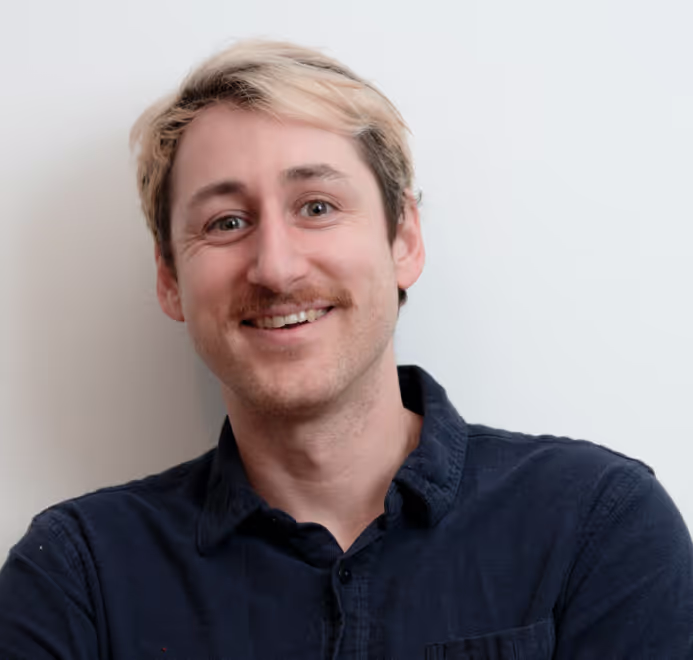
Mark Berry
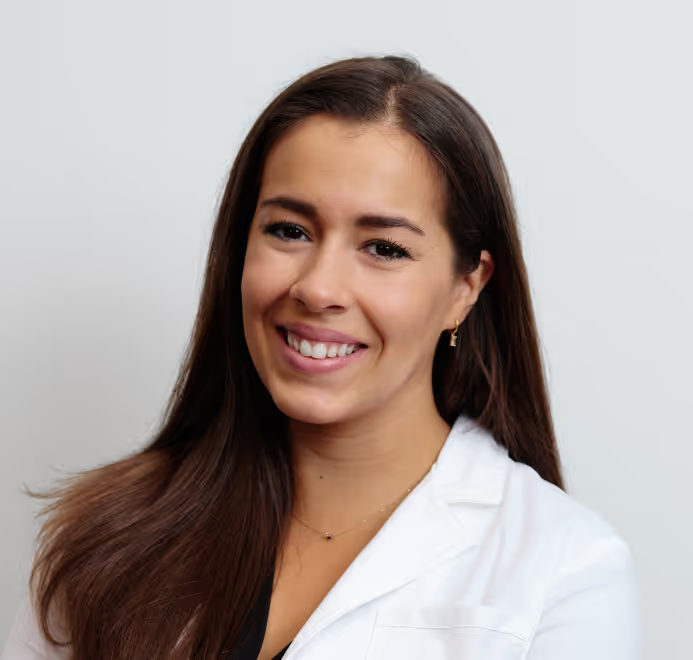
Dr. Christina Callahan, AuD

Dr. Igor Lovchinsky, PhD
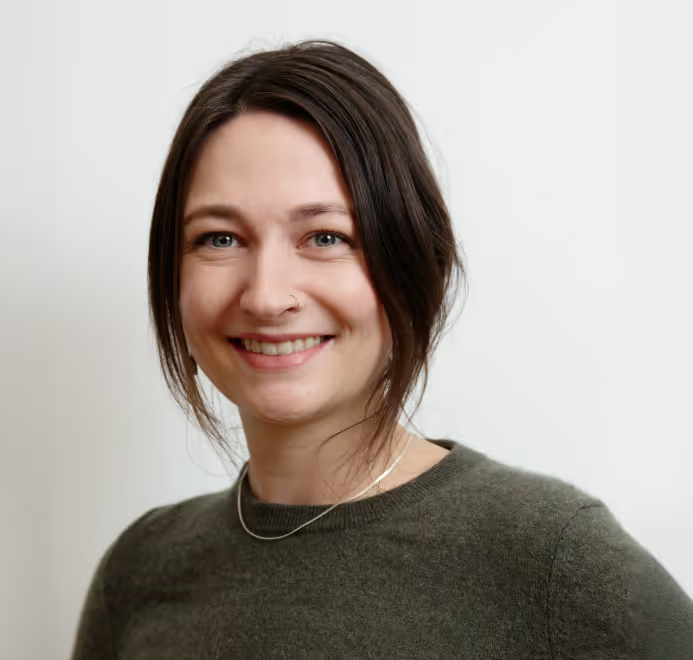
Kaitlyn Lyngaas
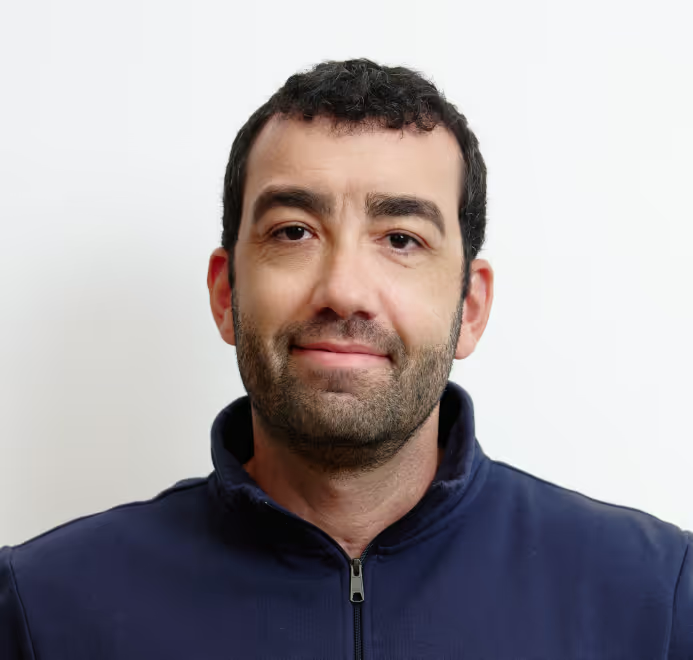
Israel Malkin

Cole Morris

Dr. Bess Nagler, AuD

Dr. Kathleen Wallace, AuD
Frequently asked questions
Yes. The study on listening preference compared Fortell against the five top-spec hearing aids on the market. The study on speech intelligibility compared Fortell to the leading AI-powered hearing aid. This ensures that Fortell’s performance is measured against the best options currently available.
In all studies we program our hearing aids and the control hearing aids to the same settings. This ensures that the comparison is always fair. For example, in the Intelligibility Study both the Fortell and control devices were programmed to their maximum settings for directionality and noise reduction.
A “gold standard” clinical trial represents the highest level of scientific rigor and credibility in testing medical devices. Key components include:
- Blinded methodology: participants don't know which device is being evaluated at a given time, eliminating bias.
- Randomized controlled trial design: Participants are randomly assigned to different testing conditions, ensuring results are not skewed by participant selection or external factors.
- Proper comparison groups: testing is conducted against the best available alternatives on the market, so that any performance claims are meaningful and relevant.
We are constantly conducting research to better serve the needs of our patients.
Peer review is the process by which independent experts in a field evaluate a study's methods and findings before it is published in a scientific journal. It is the standard credentialing process for medical and scientific research. Our study Spatial AI Consistently Preferred to State of the Art Hearing Aids in Multitalker Noise has been published in the International Journal of Audiology, the official journal of the International Society of Audiology, the British Society of Audiology, and the Nordic Audiological Society.
A lot of hearing aid performance claims are based on internal testing or marketing materials that have never been independently evaluated. Publication in a peer-reviewed journal means independent scientists in the field have examined our methods and findings and judged the work rigorous enough to enter the scientific record. It is the same standard applied to research on medications, surgical procedures, and other medical treatments.
1Results based on clinical trial “Spatial AI Improves Speech Intelligibility for Hearing Aid Wearers in Challenging Multi-talker Noise” (Nov 2025).
2Results based on clinical trial "Spatial AI Consistently Preferred to State of the Art Hearing Aids in Multitalker Noise" (May 2026).