

Clinical Research
/
December 2025
About Hearing Loss
We grew up watching our grandparents struggle with hearing aids. In quiet rooms, their hearing aids were effective, but anywhere else, they’d struggle. At restaurants and family dinners they withdrew from the conversations they once led (and loved). Their hearing aids sucked and the consequences were severe.
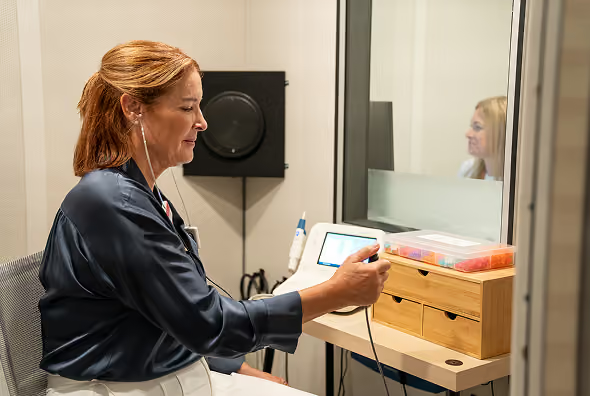
We started Fortell with the conviction that AI could radically improve hearing aids–because hearing loss shouldn’t mean losing connection with the people you love. After 5 years in development, our Fortell AI Hearing Aids are ready and you can buy them (with a prescription) today at our flagship audiology clinic in New York City.
A bit of background: ~1 in 8 Americans has hearing loss, but fewer than 16% of people with hearing loss wear hearing aids. Hearing loss is typically “sensorineural,” which means it is as much a problem with the ear’s ability to hear as it is with the brain’s ability to understand. The ear-portion is straightforward: sounds must be amplified in order to be heard. The brain-portion is more pernicious, making it challenging for people with hearing loss to follow conversation in background noise.
Over the last 30 years, hearing aid manufacturers have gotten pretty good at addressing the ear-portion of the problem: high-end hearing aids are small, run all day, and can be programmed by an audiologist to ensure wearers won’t miss quiet sounds.
But the brain-portion is the hard part. Healthy hearing people have an amazing ability to tune out background noise and focus-in on the sounds they care about. But hearing loss impairs this ability, so people with hearing loss need easier, quieter environments for their conversations. At a technical level, they require easier signal-to-noise ratio (SNR) environments. But today’s hearing aids don’t meaningfully improve SNR because they don’t know the difference between speech and noise. Their algorithms process sound on the basis of frequency, amplitude, and time, but in these domains, conversation and noise are indistinguishable. To conventional hearing aids, “signal” and “noise” are both just sound, so both get amplified.
By contrast, Fortell AI Hearing Aids selectively amplify the speech a wearer is trying to understand. Executing on this simple goal required a completely new technical approach with two novel pillars:
The net effect is a pair of hearing aids that makes you feel like you’re having a conversation in a quiet room, even when you’re in a noisy one. Fortell AI Hearing Aids are unique in the level to which they address both the ear AND brain aspects of hearing loss, ensuring conversations are both heard *and* understood.
Getting here was hard:
To everyone out there struggling with today’s hearing aids: sorry it took so long. We’re ready for you: hear at last.
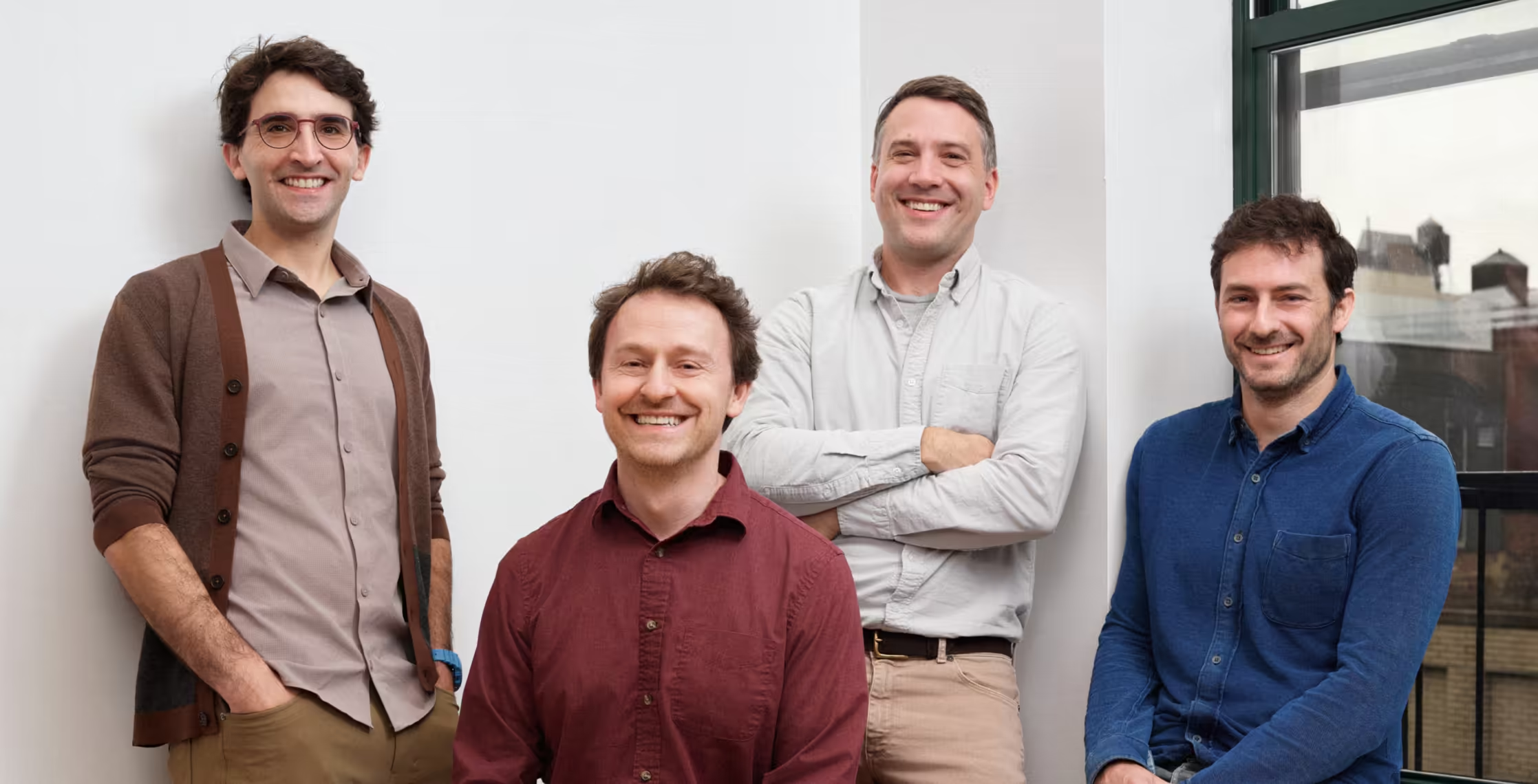
Matt de Jonge, Andrew Casper, Cole Morris, Igor Lovchinsky
Founders of Fortell