
Real Stories
/
April 2026
How Fortell Helped this Artist Reconnect with Her World
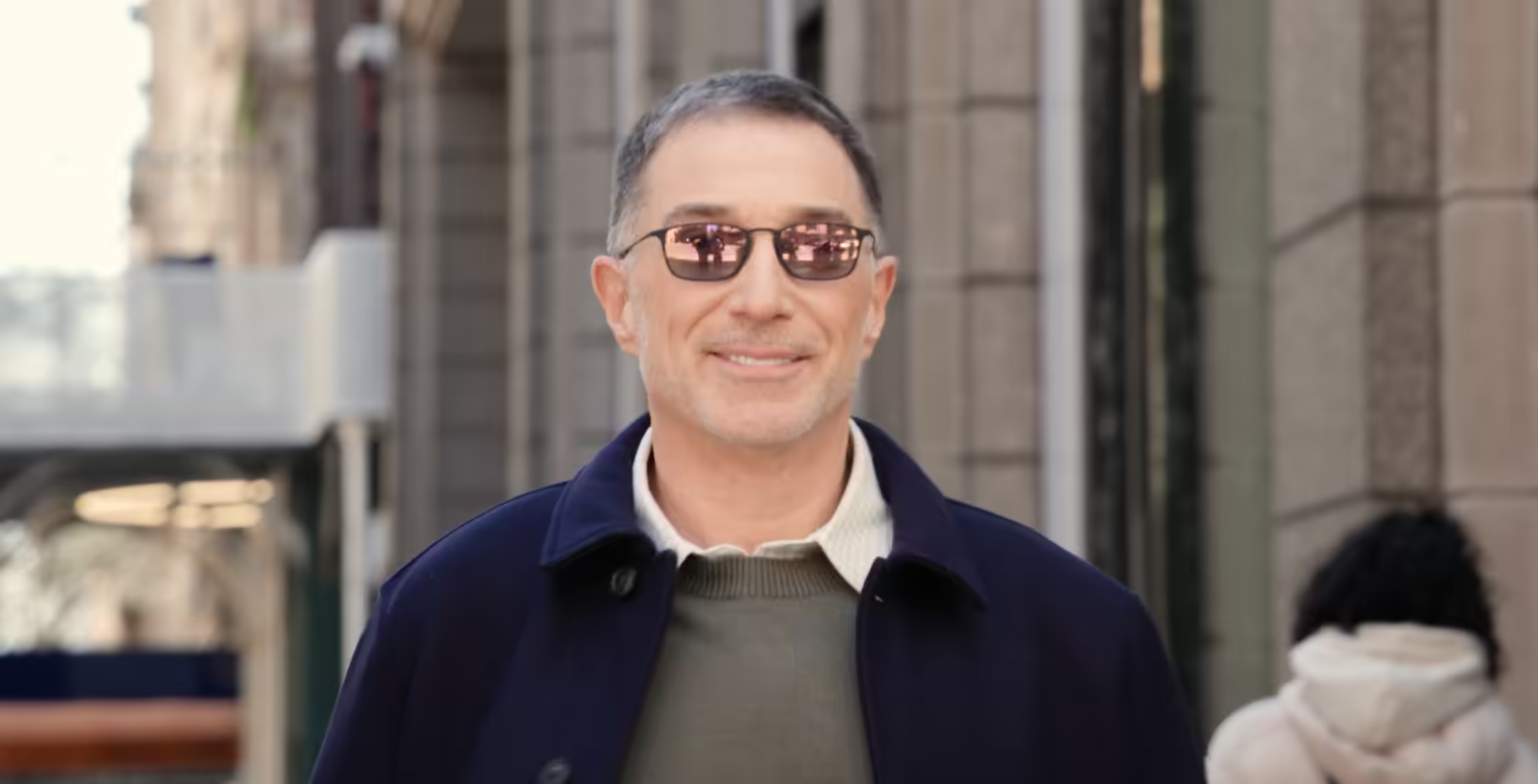
For Andres, hearing loss wasn’t a sudden event, but a slow realization. Looking back, he ties his hearing loss to his history as a pilot in Venezuela—recalling multiple instances where he didn’t wear a headset, leaving his ears exposed to the roar of aircraft engines.
Over the years, the toll of that exposure quietly accumulated. Then, seven or eight years ago, the true turning point arrived. Andres realized he could no longer follow conversations. He found himself constantly filling in the blanks, guessing what words people were saying, and missing the vital details of the world around him. “I was feeling left out of some conversations,” he said.
He did what anyone would do: he looked for a solution. He even had a professional advantage, with a close friend who owns audiology practices in the Greenwich and Westchester areas. His friend got him fitted with top-tier technology, eventually transitioning him to a device heavily marketed for its advanced AI capabilities.
“I was feeling left out of some conversations.”
Yet despite having access to the best the industry had to offer, Andres found himself trapped in a frustrating cycle of selective wearing. His hearing aids often amplified sounds he didn’t want to hear and as a result, he only put his hearing aids in when absolutely necessary.
It wasn’t until he demo’d Fortell that he found the solution he was looking for.
After years of cycling through traditional hearing aids, Andres was deeply unhappy with how they handled environmental noise. The fundamental flaw was simple: instead of isolating voices, the devices simply amplified everything.
In a bustling environment like Manhattan, this approach became a sensory nightmare. If an ambulance raced past or a sudden loud noise occurred, the sound became physically painful. Walking down the street, he frequently felt a strong urge to just pull the devices out of his ears.
Because the experience was so unpleasant, Andres became a part-time user. He only wore his hearing aids when a situation forced his hand. He did so reluctantly, knowing how important hearing was for his ability to stay connected. “I view hearing aids as even more important than my eyeglasses,” Andres said. “I can navigate a world without sight, but I feel lost without the ability to communicate.”
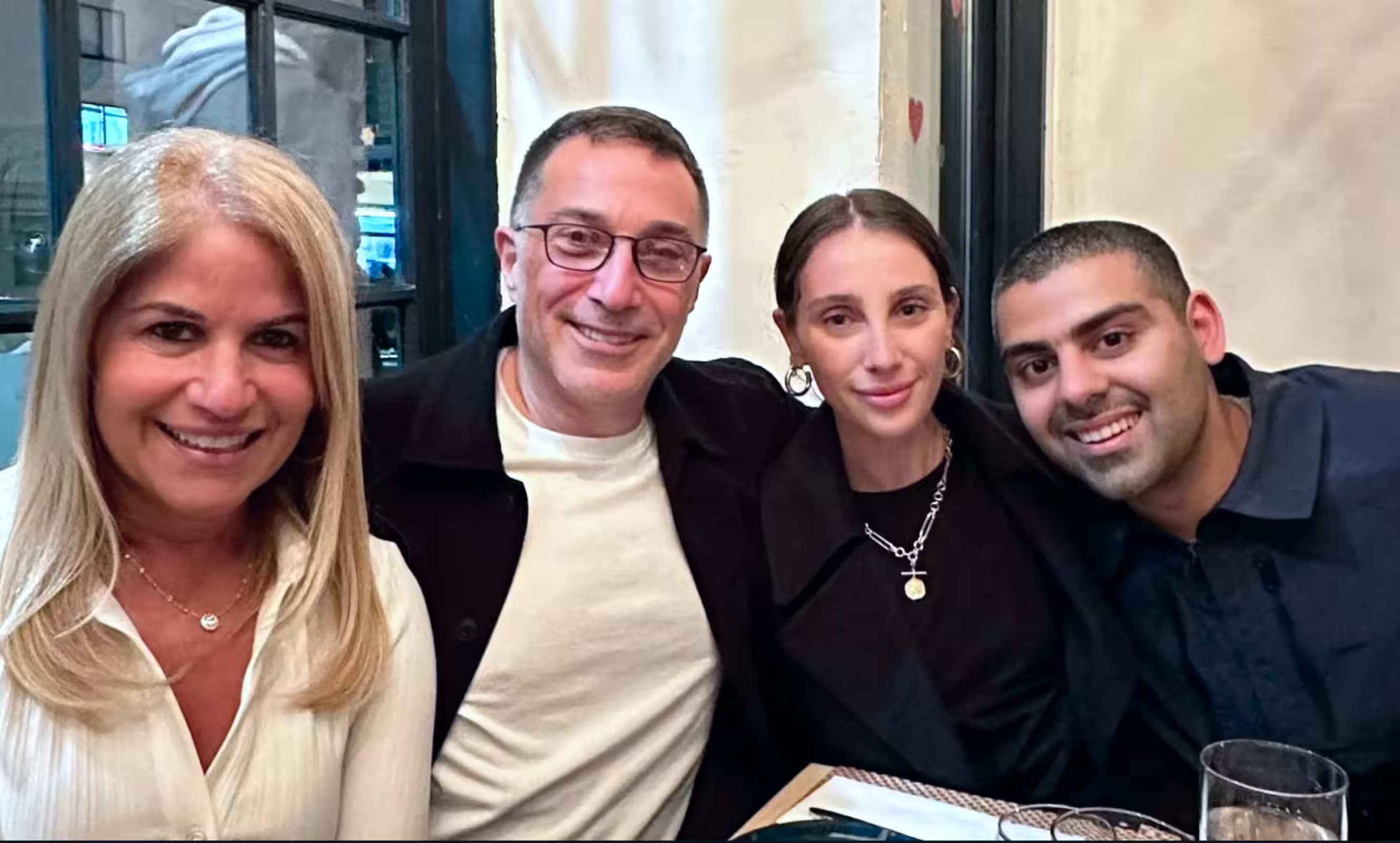
The moment Fortell launched in late 2025, Andres was ready. With his office sitting just three blocks away from the Fortell clinic, he scheduled his appointment right away.
On the first night with his new hearing aids, he went to an echoey restaurant —the exact type of place he used to strictly avoid because the background noise made it impossible to hear his friends or family. This time, the experience was entirely different. He could make out his children’s voices over the noise and stay in the conversation.
“Before I used my hearing aids only on some occasions, but now as soon as I wake up I put my Fortells on.”
Months later, Andres is still pleased with his Fortell AI Hearing Aids. “Before I used my hearing aids only on some occasions, but now as soon as I wake up I put my Fortells on,” he said. “I would not trade them back for anything.”