

Education
/
October 2026
How Long Do Hearing Aids Last and When Should You Replace Them?
In the office, your audiologist made it look effortless: a quick tuck behind the ear, a gentle push, done. At home, the same hearing aid can feel like a different device. The dome won’t settle, the earpiece feels loose or itchy, or a whistle cuts in just as you reach for your coffee. It is easy to assume something is wrong with the hearing aid itself.
Usually, nothing is. Most audiologists demonstrate insertion once, and once you know the details that create a good seat for your device, the motion becomes second nature in a few days. We build Fortell hearing aids for simple, intuitive daily use, but inserting them at first still takes a little practice. Once you learn the quick techniques for your specific style, putting them on becomes second nature in just a few days.

The insertion technique depends on which family your device belongs to. Behind-the-ear designs have two parts to place: the body that rests on top of the outer ear and the piece that goes into the ear canal. In-the-ear devices are a single shell, so they go in as one piece. The table below shows which instructions to follow; for full descriptions of each design, see our guide to hearing aid styles.
A 30-second routine before you pick up the device prevents most of the fumbling and feedback covered later in this guide.
One rule applies to every style: approach from the direction that matches your device, use light and steady pressure, and if it doesn’t seat with a gentle push, reposition rather than force it. Many people find it helps to gently lift and draw your outer ear backward using your opposite hand, which briefly straightens the ear canal.
Behind-the-ear (BTE) hearing aids come in two versions. Some connect to a custom earmold through tubing (see the ear mold section below). Open fit hearing aids use a thin plastic tube that ends in a soft dome.
Avoid pulling or steering the hearing aid by the tubing alone, which can loosen or crack it. Boys Town National Research Hospital cautions against this for BTE users.
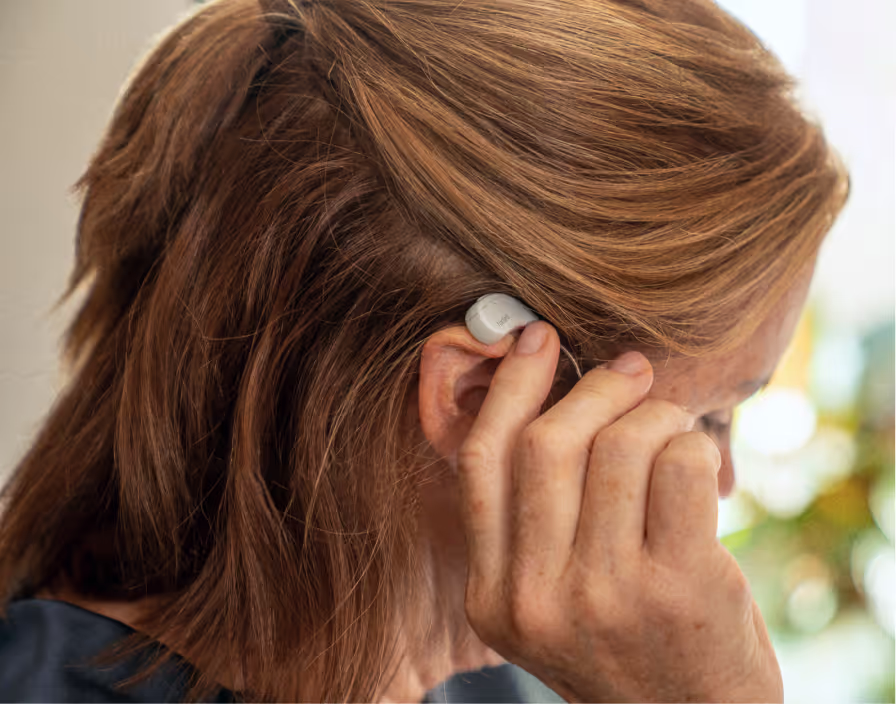
Fortell AI Hearing Aids use a receiver-in-canal (RIC) design. Follow these steps from Fortell’s Instructions for Use to insert them correctly:
In-the-ear (ITE) hearing aids are custom shells made from an impression of your ear, including smaller CIC (completely-in-canal) and invisible-in-canal (IIC) models. Because the shell matches your ear’s shape, there is usually only one way it fits.
A custom earmold works differently from a dome. Its shape follows the curves of your ear, so it needs a small twist to lock into place, and skipping that twist is a common cause of a poor seal and whistling. With an earmold, the earpiece goes in first and the hearing aid goes over your ear second. Boys Town National Research Hospital recommends holding the earmold by its bottom, gently pulling back and up on your outer ear, and twisting the earmold slightly forward as you place it in the canal. Then push it in while rotating it backward, press with a fingertip to confirm it’s all the way in, and place the hearing aid over the top of your ear.
Once the basic motion feels familiar, a few habits make it faster and more reliable:
“It usually takes time and practice to get used to wearing hearing aids.”
{{banner_living}}
Most confusion after insertion comes down to two questions: why is it whistling, and is it seated right?
A hearing aid whistles when amplified sound escapes from the ear canal and loops back into its own microphones. Think of a microphone held too close to a speaker at a school assembly. The usual causes are a dome or earmold that isn’t fully inserted, a size that no longer seals well, or earwax that reflects sound back out. A brief whistle when you cup your hand over your ear or hug someone is normal; a constant whistle is not.
For Fortell AI Hearing Aids, the Instructions for Use list three steps when a hearing aid is squealing:
If whistling continues after these steps, the dome size or fit may need an adjustment, or the device may need service. Our guide to how long hearing aids last explains when repair or replacement makes sense.
A correctly inserted hearing aid feels secure without pain, stays quiet unless something touches it, and sounds balanced between both ears. From the side, the body should rest snugly behind the ear and the wire or tube should lie flat against your head. If one ear sounds muffled, the device whistles, or you feel pressure or soreness after an hour, take it out and reinsert it. If that doesn’t help, ask your audiologist to check the fit.
Removal is the other half of the daily routine, and rushing it is the most common way a dome gets left behind in your ear canal or a device gets damaged. Follow the same calm motion each time:
“If the dome is missing from the receiver after removing the hearing aid, it may still be in your ear canal.”
Fortell’s receiver-in-canal hearing aids build in small details that remove the most common early frustrations. A blue marking identifies the left hearing aid and a red marking the right, and the charging case uses the same colors, so you don’t mix up the sides. An optional Sportslock, similar to the retention wires some RIC hearing aids use, follows the contour of your ear for extra security during walks, workouts, or a day of travel. The hearing aids turn on when you lift them from the case and off when you return them.
Once your hearing aids are in, you rarely need to take them out to adjust your sound. The Fortell app lets you change volume, listening modes, and tone, while your Fortell audiologist can fine-tune your audio settings remotely. For every detail on physical fit, dome replacement, and daily storage, download Fortell’s official Instructions for Use.
Fortell AI Hearing Aids are for prescription use by adults with hearing loss and available in the U.S. only.
{{banner_comparing}}
Correct hearing aid insertion comes down to three things: knowing your style, repeating the same few-second motion, and running two quick checks, no whistle and no pain. What feels fiddly this week usually feels automatic by the next, and a few days of practice in front of a mirror go a long way.
If you’ve tried the steps in this guide and your hearing aids still feel loose, sore, or noisy, a professional check is the fastest path forward. Start with Fortell’s eligibility check to book a hearing evaluation, or visit a Fortell Audiology location for an in-person fit adjustment.


A hearing aid dome should sit fully inside the ear canal, far enough that the receiver wire or thin tube lies flat against the side of your head. You shouldn’t see the dome sticking out of the canal opening, and it should never hurt. Your audiologist chooses the dome size and receiver length for your ear, so if the dome won’t go in comfortably, ask them to check the fit rather than pushing harder.
For most people, gently pulling the outer ear up and back works best, because it briefly straightens the ear canal and opens a clearer path for the dome or earmold. Use your opposite hand to pull while your other hand inserts the hearing aid. Some people with in-the-ear hearing aids find that pulling the earlobe slightly down works better. Either approach is fine if it feels comfortable and the hearing aid seats securely.
Lightly pull your ear back and up to straighten the canal, then guide the hearing aid in using a mirror to confirm a snug fit. If it still feels stuck or whistles, check for earwax buildup or try a different dome size. If you use Fortell devices, refer to your Instructions for Use guide for specific step-by-step care.
To remove a hearing aid without damaging it, hold a sturdy part of the device, not the tubing or the middle of the receiver wire. Lift behind-the-ear bodies off first, then ease the dome or earmold out with a slight forward twist. For in-the-ear styles, use the removal handle or grip the shell. Check that the dome is still attached, then store the hearing aid in its case or charger.