
Product
/
September 2026
How Do Hearing Aids Work?
“Hearing aid” may sound like a single product, but the number of available options can quickly feel overwhelming, even before you begin comparing features. The options come with unfamiliar names (Behind-the-ear, Receiver-in-canal, In-the-ear, In-the-canal, among others) and the differences are not always obvious. Some devices sit behind the ear, while others fit partly or completely inside it. Each style also offers different advantages in comfort, visibility, battery, and ease of use.
This guide makes those hearing aid options easier to understand by organizing the most common styles into two main categories: behind-the-ear and in-the-ear. You will learn how each style fits, what distinguishes it from the others, and which practical factors can help narrow your choices. By the end of this article, you will have a clearer understanding of your options and the questions to discuss with an audiologist.
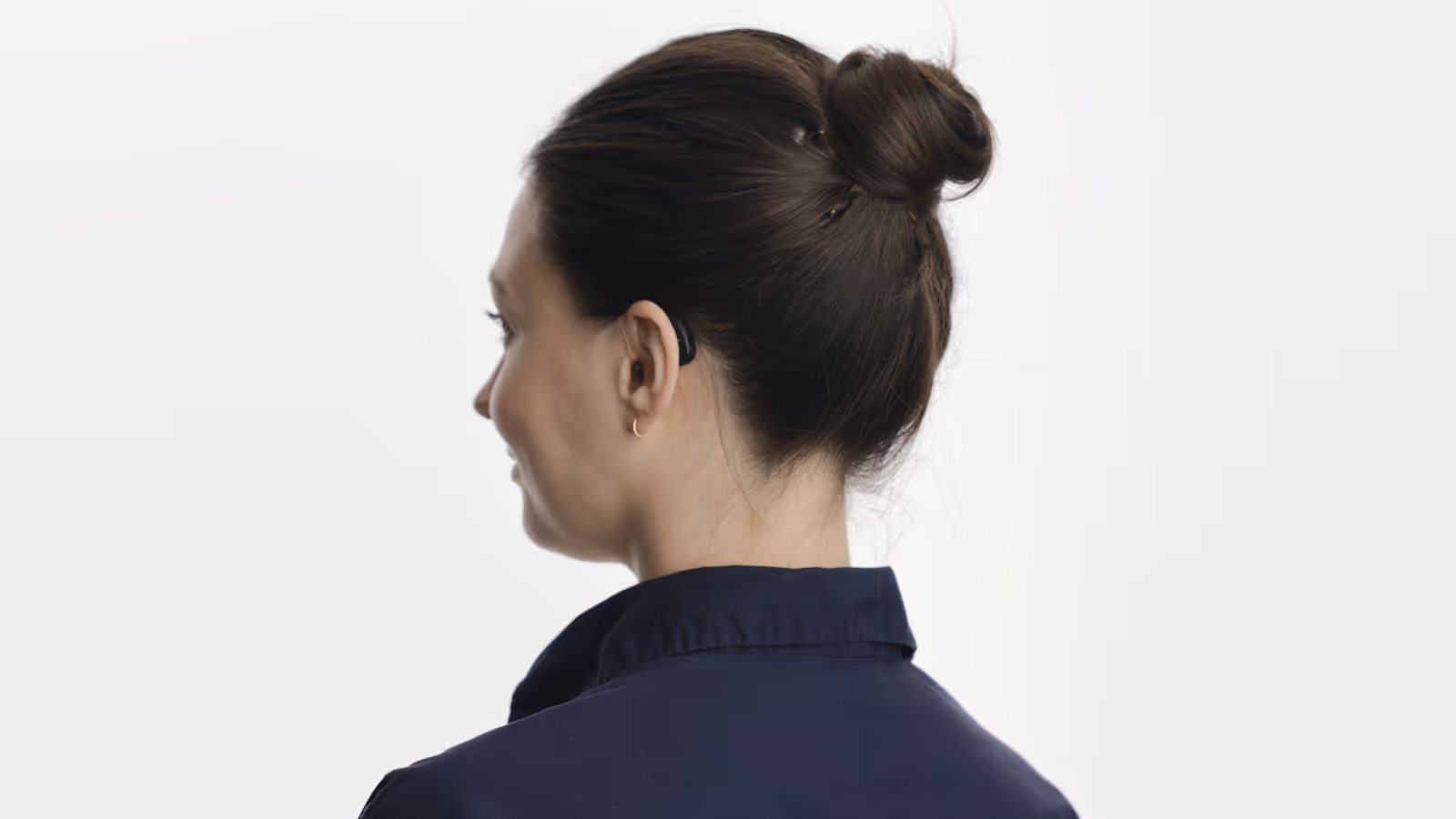
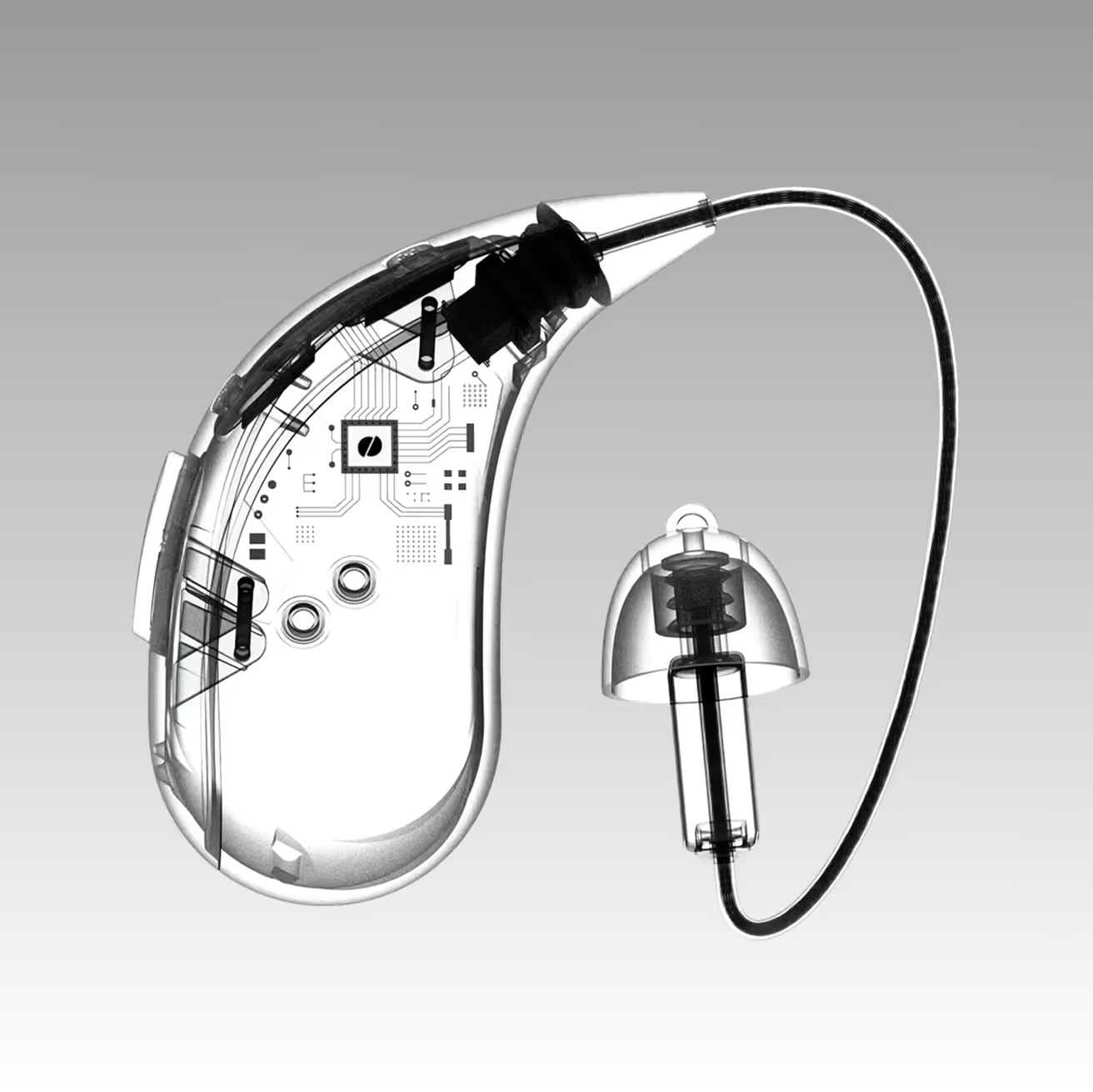
Every hearing aid follows the same basic path. A microphone picks up sound, a processor adjusts that sound for the wearer’s hearing needs, and a speaker (also called a receiver) delivers it into the ear. The style changes where those parts sit, but not the job they perform.
Most modern hearing aids use digital processing. Digital devices convert sound into data, which lets an audiologist shape specific pitches and use features such as directional microphones or noise reduction. Older analog devices amplify electrical sound signals with less flexibility. For a closer look at the signal path and the role of modern processing, read how AI hearing aids work.
Hearing aids do not restore normal hearing or cure hearing loss. The NIDCD explains that they can increase awareness of sounds and their sources. In practice, well-fitted devices amplify and clarify sound and can recover clarity to conversation by making speech more accessible.
Nearly every style of hearing aid falls into one of two categories: behind-the-ear models, which place most electronics in a case behind or on top of the ear, and in-the-ear models, which place the complete device inside the outer ear or ear canal. The placement shapes the amount of power available, how visible the device is, how easy it is to handle, and how much of the ear canal remains open.
Bluetooth, rechargeable batteries, and AI-powered noise processing may appear in more than one style. We cover those features separately below so you can first compare the physical designs.
“Nearly every style of hearing aids falls into one of two categories: behind-the-ear models and in-the-ear models”
Behind-the-ear devices keep their main electronics in a case behind or just above the ear. A tube or thin wire carries the processed sound to an earpiece in the ear canal. These hearing aids offer broad fitting flexibility, and its slightly larger housing can make room for more power, battery capacity, and controls.
Greater amplification and easier handling are two advantages of standard behind-the-ear (BTE) models. The main components sit in a sturdy case behind the ear, while a tube carries sound to an earmold or dome. This design can support many levels of hearing loss, including more severe loss that may require more power than a smaller device can provide.
The larger case can also make the device easier to hold, clean, and adjust than a tiny in-canal device. In exchange, wearers may find the case and tubing more noticeable. A custom earmold may create a fuller feeling in the ear, but its secure fit can help deliver sound consistently and reduce feedback at higher power levels.
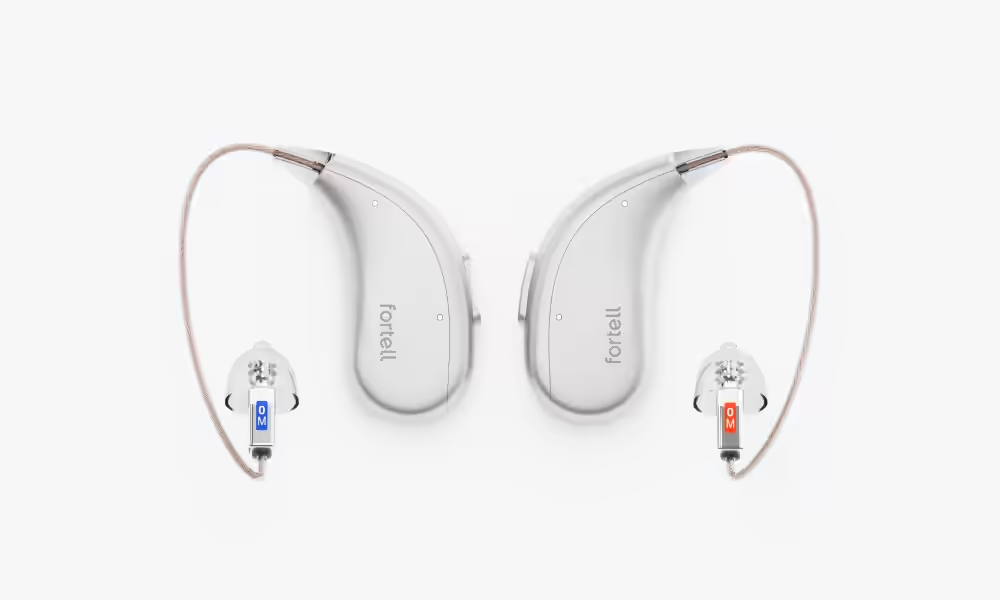
With a slim case behind the ear and a thin, nearly invisible wire, receiver-in-canal hearing aids offer a discreet design. Unlike a traditional BTE, a RIC places the speaker inside the ear canal and connects it to the case. Receiver-in-the-ear, or RITE, generally refers to the same arrangement.
Moving the speaker into the canal keeps the device compact while leaving room in the case for advanced processing, rechargeable batteries, and wireless features. Fortell’s AI hearing aids use this RIC design, pairing a discreet fit with AI-powered sound processing. An audiologist can often change the receiver strength or replace a soft dome with a custom tip as hearing or fit needs change.
Leaving more of the ear canal open can help when low-pitched sounds remain easier to hear. Open-fit BTEs use a small case behind the ear and a thin tube or wire connected to a vented dome. Low-pitched sounds can enter naturally while the device supports the pitches that need more help.
The open design can make the wearer’s voice sound more natural and reduce the “plugged” sensation associated with some closed earmolds. It often suits hearing patterns with stronger low-frequency hearing and greater high-frequency loss, however, people who need more power or feedback control may benefit from a more sealed fit.
As a specialized sub-category of Behind-the-Ear (BTE) hearing aids, CROS and BiCROS systems share the same physical design as traditional BTE models: a small body resting discreetly behind the outer ear, connected by a thin wire or clear tube to a soft dome or custom earmold inside the ear canal. What sets this sub-category apart is how the devices process sound across both ears for single-sided hearing loss. A microphone worn on the non-hearing ear captures sound and wirelessly transmits it to the receiving BTE device on the better-hearing side.
A CROS (Contralateral Routing of Signals) setup fits individuals with normal or near-normal hearing in their better ear by simply relaying sound without extra amplification. A BiCROS system also amplifies incoming sound if the better-hearing ear has its own degree of loss. Because these systems route audio rather than restoring natural two-ear hearing, a professional evaluation helps determine if this BTE style suits your needs.
Instead of placing the main components behind the ear, in-the-ear devices contain their electronics in a custom shell within the outer ear or ear canal. They require no external case or tubing. This placement can make the device less visible, but the smaller size may also limit battery capacity, controls, or wireless features.
More space inside the shell gives full-shell and half-shell models room for features that smaller in-canal devices may not offer. A full-shell hearing aid fills most of the bowl-shaped outer ear, while a half-shell version rests in its lower portion. Their custom shells can accommodate larger batteries, manual controls, directional microphones, or telecoils more easily than smaller styles.
The additional surface area can also make these devices easier to insert and remove, particularly for people with limited dexterity. They are more visible than smaller canal devices, and their microphones may pick up more wind noise because they sit in the outer ear. Depending on the model and fitting, they can support mild through severe hearing loss.
Partly inside the ear canal and partly visible in the outer ear, ITC models bridge the gap between larger ITE shells and deeply seated canal devices.
This design offers greater discretion without making every control extremely small. Depending on the model, an ITC may still include wireless connectivity, directional microphones, or a rechargeable battery. Its compact shell generally provides less power and fewer physical controls than larger ITE or BTE styles, and some people may find it harder to insert or adjust.
Discretion drives the design of completely-in-canal hearing aids. Nearly the entire device sits inside the ear canal, with only a small outer edge or removal line potentially visible. This position also allows the shape of the outer ear to help collect sound naturally.
The discreet size comes with practical trade-offs. Its small shell leaves limited room for battery capacity, microphones, and controls, and some CIC models lack the wireless streaming or directional microphone systems that larger devices offer. Close contact with the ear canal also increases exposure to earwax and moisture, making regular care especially important.
Deeper placement sets invisible-in-canal devices apart from CIC models. They sit farther inside the ear canal, making them the least visible hearing aid style and an option for people who value discretion and have an ear canal that can comfortably accommodate the device.
Fitting so much technology into a very small shell creates limitations. IIC devices can prove harder to insert, remove, and clean, while their size can restrict power, battery life, onboard controls, and connectivity. Ear shape and hearing-loss severity also determine whether this style suits a particular wearer. “Invisible” describes the design goal, not a guarantee that the hearing aid will remain completely hidden.
Cochlear implants and bone-anchored hearing devices may help some people whose hearing needs cannot be addressed sufficiently with conventional hearing aids. These surgically implanted technologies work differently from hearing aids, so an implant specialist should evaluate candidacy.
{{banner_comparing}}
Styles of hearing aids determine where they sit, but features determine much of what they can do. Once an audiologist identifies the styles that can support your hearing, compare models considering what matters the most for you:
Consider the degree of your hearing loss, as well as comfort and daily life needs. These examples can help you prepare to discuss the alternatives with your audiologist:
{{banner_tech}}
The specifications only become useful when they connect to your hearing and your routines. Before you commit to a style, work through these practical steps:
Choosing a hearing aid style is only one part of the decision. The device also needs to make conversation easier in the places where listening becomes most difficult and come with enough time and professional support to determine whether it truly fits your life. Fortell uses a receiver-in-canal hearing aid that uses real-time Spatial AI to separate voices from competing background noise.
In published, peer-reviewed research on speech-in-noise performance, Fortell’s technology eliminates up to 98% of background noise in the tested conditions. For wearers, that reduction can make the person they want to hear easier to follow without simply making the entire room louder.
Because real-world listening cannot be judged during a single office visit, Fortell includes a 100-day home trial. Wearers can test the prescription devices at dinners, meetings, and other everyday conversations, while 5 years of audiological care provide continued fitting support and adjustments as their needs evolve. See the Fortell AI Hearing Aid or read patient stories to learn how other wearers describe the experience.
“Fortell’s technology eliminates up to 98% of background noise in the tested conditions”

There is no single best hearing aid type. Behind-the-ear styles often offer more power, flexibility, and room for features. In-the-ear styles can provide a custom fit and greater discretion. The right choice matches the degree and pattern of your hearing loss with the way you want to listen, the device you can handle comfortably, and the care available after the fitting.
A professional evaluation turns that broad menu into a useful shortlist. When you are ready, book an appointment to discuss your options with an audiologist.


No single hearing aid style is best for everyone. The right option depends on the degree and pattern of hearing loss, listening environments, comfort, dexterity, and preferred features. An audiologist can evaluate these factors and recommend suitable styles.
Regular daily use can help your brain adjust to amplified sound and make the devices feel more natural over time. Follow your audiologist’s recommended schedule, and remove your hearing aids before sleeping, showering, or swimming unless instructed otherwise.
Most hearing aids last approximately three to seven years. Their lifespan depends on the device style, daily use, exposure to moisture and earwax, maintenance, and repair history. A device may also need replacement if changes in hearing exceed its fitting range.