
Product
/
May 2026
Why Can I Hear But Not Understand? The Case for Speech in Noise Testing

Most people who should get a hearing test haven't. Research suggests people wait an average of ten years after noticing hearing problems before doing anything about it, usually because the change is so gradual it's easy to explain away or ignore.
But getting your hearing tested is one of the simplest things you can do to stay on top of your health, and it's a lot more straightforward than most people expect. We sat down with Dr. Kathleen Wallace, audiologist and NYC clinic director at Fortell, to walk through exactly what happens inside the booth during a hearing test.
A note: The process Dr. Kathleen describes reflects the Fortell Audiology model. Some elements are specific to Fortell but the core testing, the tones, the speech tests, are fairly standard across the industry.
Dr. Kathleen Wallace: When you first come in, we'll sit down and I'll get a bit of your history. Why you're here, what's been going on with your hearing, and what you're hoping to get out of the visit. Things like whether you've noticed difficulty in noisy environments, any ringing or fullness in the ears, past ear infections, or any family history of hearing loss. That context really shapes how I interpret your results.
I'll also take a quick look inside your ears to check the ear canal and eardrum, making sure there's no wax blockage, and that everything looks healthy in the ear canal before we start testing.
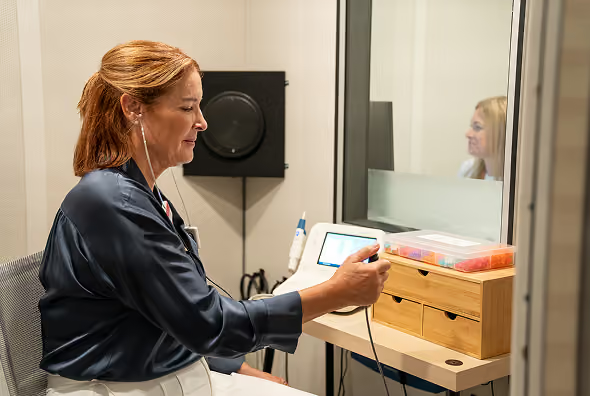
Dr. Kathleen Wallace: There are a few different components. The first thing I'll do before the listening tests is a quick measurement called tympanometry. This checks how well your eardrum is moving. Sound enters your ear canal, vibrates the eardrum, and that signal travels inward to your cochlea, your hearing organ. A healthy result shows a nice peak in the middle of the graph.
A flat line can indicate things like a hole in the eardrum, fluid, or pressure buildup. It only takes a few seconds and you just feel a small amount of pressure, no discomfort.
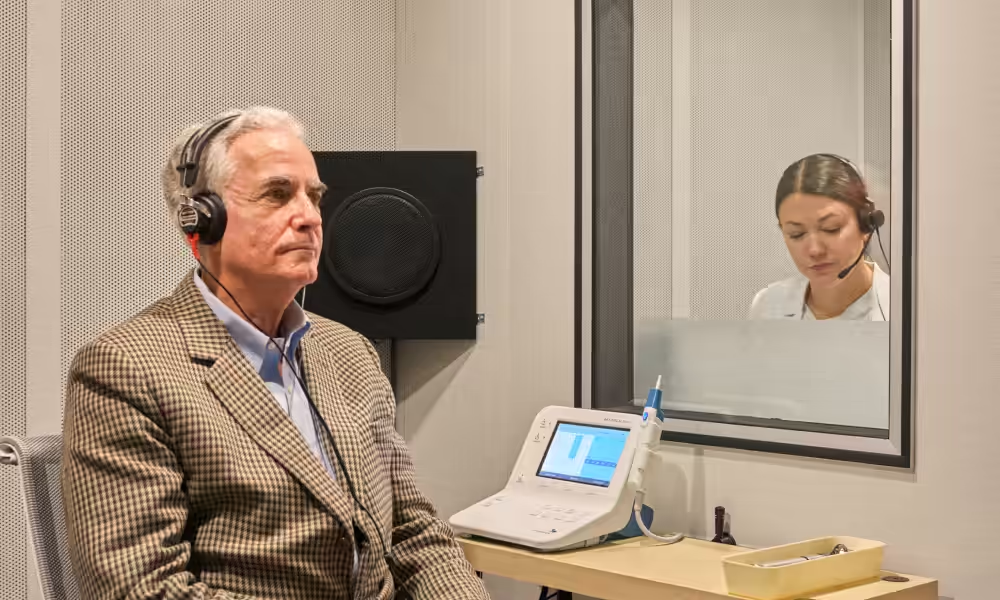
Then we move into the sound booth for the hearing and listening tests. There are three main parts:
1) Pure tone audiometry: You'll wear earplug-style headphones and hold a button. You press it every time you hear a beep, no matter how soft. The tones get progressively quieter at different frequencies until we find the absolute softest sound you can detect at each pitch. We score you based on when you're hearing a sound about 50% of the time.
2) Speech testing: I'll play single words and ask you to repeat them back. This tells us how well you're resolving speech at normal volumes.
3) Speech in noise testing: This is the hardest part. You'll hear sentences with background noise playing simultaneously, and your job is to repeat back what you heard as best you can. This measures your signal-to-noise ratio, essentially how much background noise can be present before you start struggling to understand speech. It's the test that most closely mirrors real life listening.
It sounds like a lot but it’s a quick process. All of these tests combined take less than 20 minutes to complete.
Dr. Kathleen Wallace: Hearing is what you can physically detect, the softest sound your ears can pick up. Listening is more about everyday life: can you pay attention to and focus on what you're hearing? There's a real attention element to it.
So someone might have technically normal hearing but still struggle in noisy environments, and that's worth understanding too. We test for both, so I mentioned “listening tests” since that encompasses the focus element and speech in noise testing.
“Someone might have technically normal hearing but still struggle in noisy environments, and that's worth understanding too.”
Dr. Kathleen Wallace: Everything gets plotted on an audiogram. The red line is your right ear, the blue line is your left. The vertical axis shows volume. If your results fall above the 25 dB line across the board, you're within normal limits.
One of the most useful overlays we use is a visual map of where different speech sounds fall on that same graph called the speech banana. Consonants like P, H, G, K, and T sit at higher frequencies. If someone's hearing loss dips into that zone, they're missing the sounds that give speech its clarity, even if they can hear that someone is talking. That's often what's behind that frustrating experience of hearing voices but not quite making out the words.
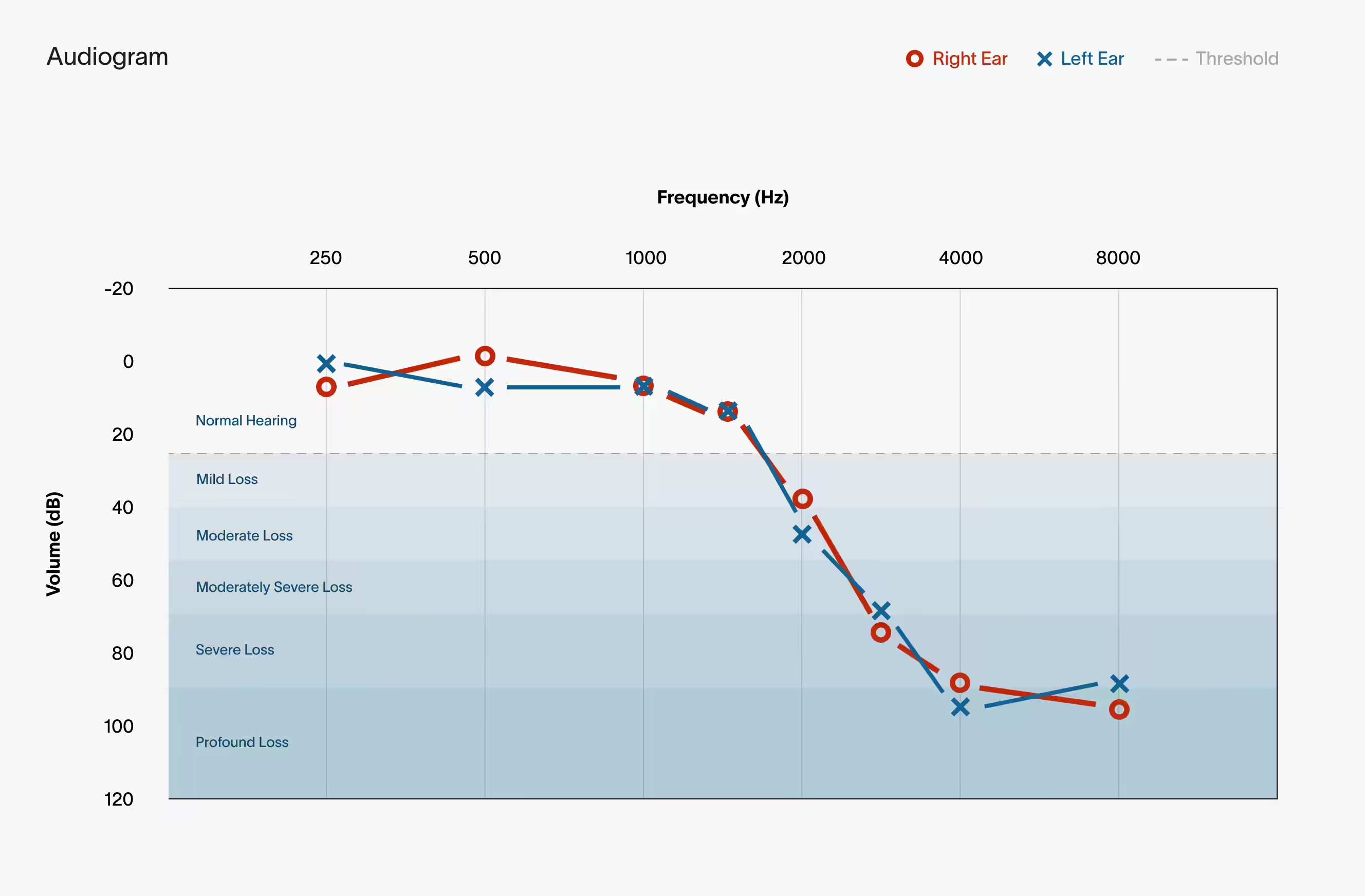
Dr. Kathleen Wallace: A common benchmark audiologists use is any degree of hearing loss at 2,000 Hz or above. But it's not just about the pure tone results. The speech-in-noise score matters a lot, too. Someone might do perfectly well in a quiet room but really struggle as background noise increases. When that pattern shows up, hearing aids can make a meaningful difference to quality of life, even in cases that might look borderline on paper.
We also take subjective measurements by asking patients to complete a questionnaire about how hearing impacts their day-to-day life. All of this combined gives us a holistic look at their hearing health.
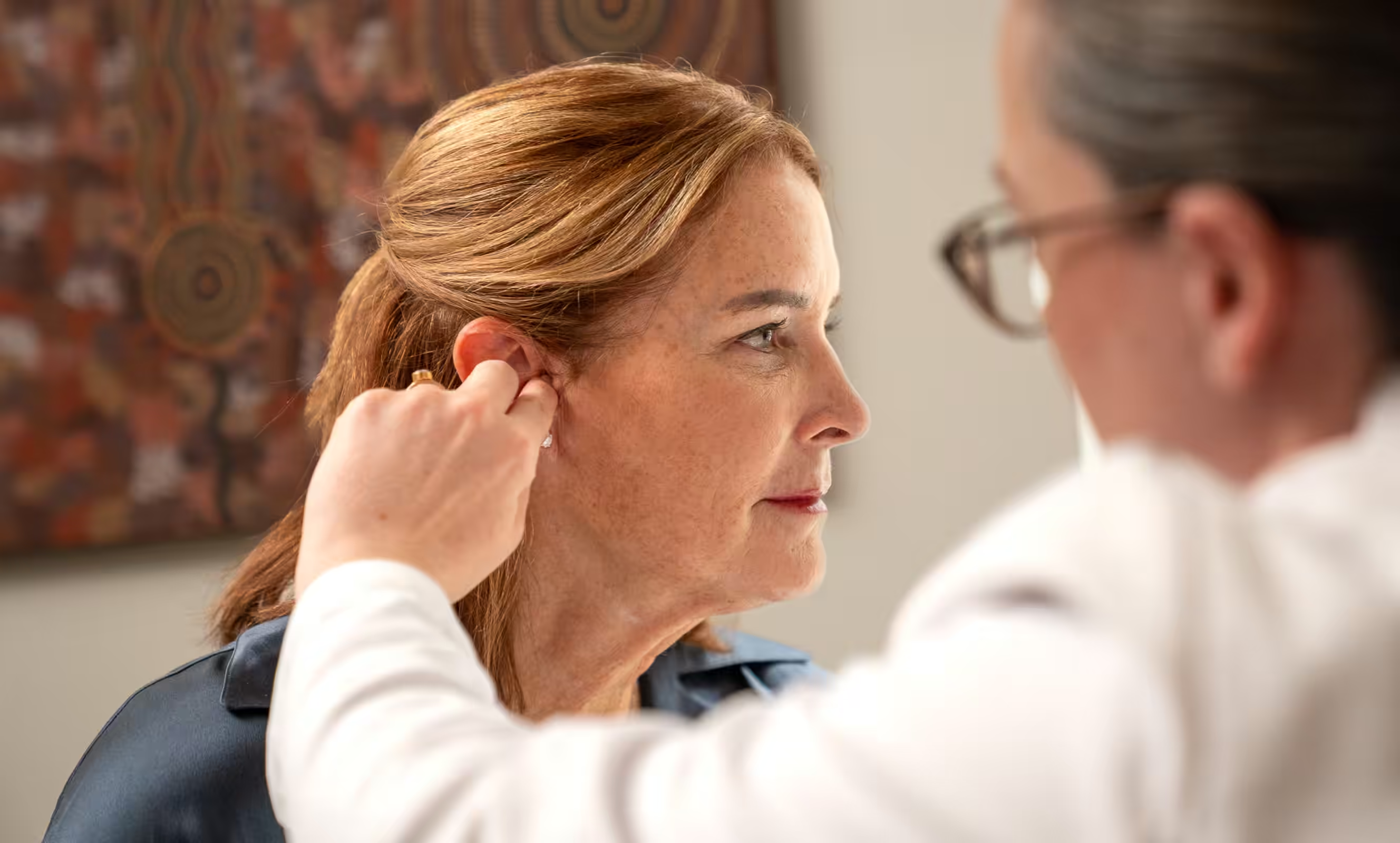
Dr. Kathleen Wallace: If we think hearing aids are the right next step, we will fit you in the same appointment. The style we use is called a receiver-in-canal aid. The main body sits behind the ear, a thin wire runs along the front, and a small speaker sits inside the ear canal held in place by a soft dome. Most people find it much more comfortable and discreet than they were expecting.
Once they're in, we actually take you outside for a demonstration.
Dr. Kathleen Wallace: Many clinics fit you in a quiet room and send you on your way. We want you to hear the difference in real-world noise before you leave. We'll walk to a nearby park or cafe, somewhere with actual background noise, and you can experience right away how the hearing aids perform where it counts.
This is sometimes an emotional moment for people because we encourage you to bring a family member or friend to the appointment and it’s at this moment that they are able to hear a friend or spouse’s voice through the noise for the first time in years. We’ve had people cry because they are so overcome by the difference. It’s a gratifying feeling every time.
“It’s at this moment that they are able to hear a friend or spouse’s voice through the noise for the first time in years. We’ve had people cry because they are so overcome by the difference.”
Dr. Kathleen Wallace: Don't be nervous. It's not painful and there's nothing to study for. Just respond honestly to what you hear, even if the sounds seem impossibly faint. And don't hold back on your history. Things like past ear infections, burst eardrums, or years of loud music exposure are all relevant, even if they happened a long time ago. The more context I have, the better I can interpret what I'm seeing.
Booking a hearing assessment with Fortell takes just a few minutes. Schedule your appointment here.

.png)