
News
/
June 2026
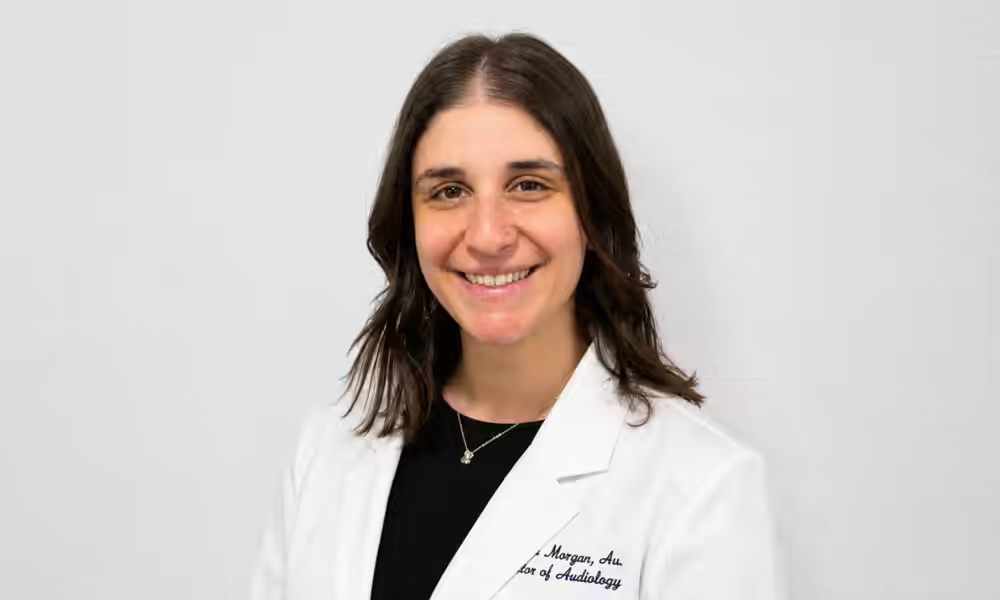
Meet Fortell Greenwich Director of Audiology Dr. Samantha Morgan, Au.D.

Whether this is your first hearing evaluation and hearing aid fitting or you've had one before, your Fortell appointment will likely feel different from what you've experienced. Here's what your visit looks like from start to finish.
A little preparation goes a long way to make the most of your 90 minutes with the audiologist.
When you arrive, someone will greet you and introduce you to your audiologist, who will spend the first part of your appointment getting to know you, your hearing goals, and where you notice your hearing loss the most.
How long have you noticed changes in your hearing? In what situations is it hardest to follow a conversation? Are you turning up the TV, asking people to repeat themselves, avoiding noisy restaurants? If you've brought someone with you, this is a good moment for them to chime in. They often notice things you've adapted to without realizing.
This conversation isn’t just small talk, it shapes how your audiologist interprets your hearing test results and the recommendations they provide. Two people can have identical test results and very different needs.
.avif)
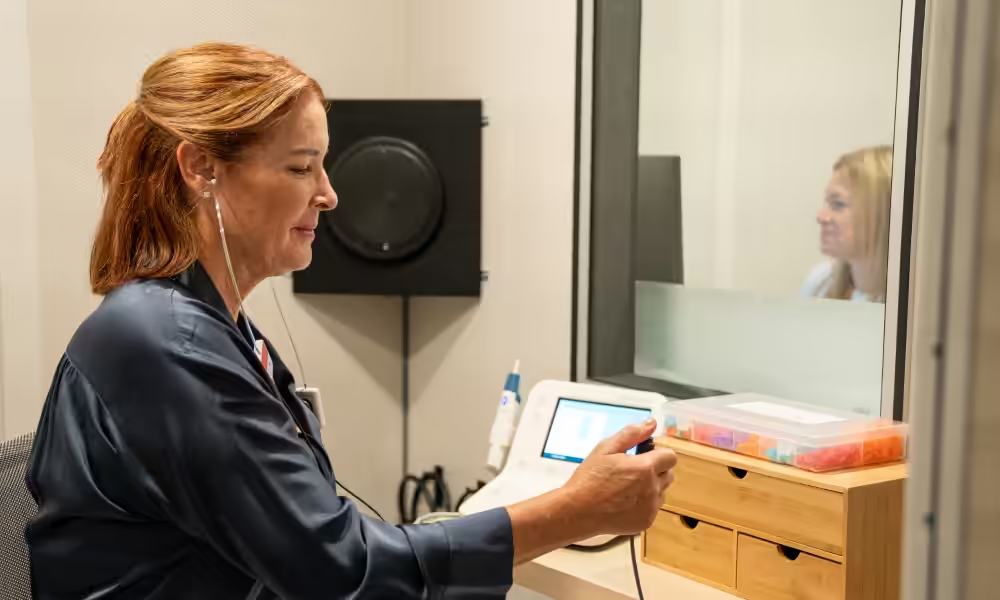
The hearing tests take place in a soundproofed room. You'll put on headphones and complete three simple assessments that take less than 20 minutes total.
The first is a pure tone audiometry test. You’ll wear earplug-style headphones and hold a button. You’ll press the button every time you hear a beep. The tones get progressively quieter until the audiologist finds the softest sound you can detect at each pitch. The results of this assessment get plotted on an audiogram.
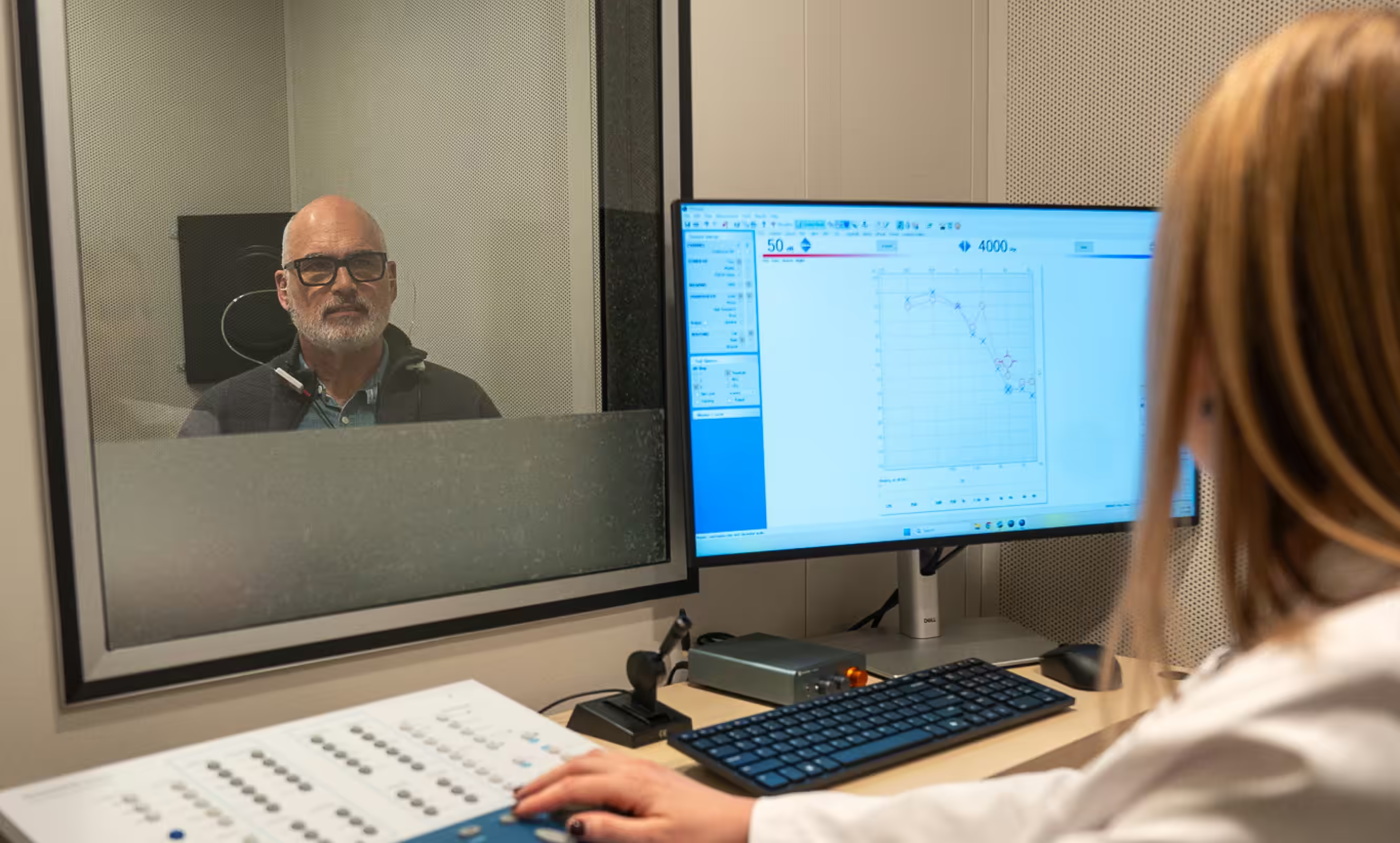
The second test is speech testing. Your audiologist will play single words and then ask you to repeat them back. This test tells the audiologist how well you’re resolving speech at normal volumes.
The final test is the most challenging. You’ll hear sentences with background noise playing at the same time and you’ll repeat back the words you heard. This is called speech-in-noise (SIN) testing and it measures your ability to hear speech in background noise. It is the best proxy for real-world listening.
Together, the three tests give your audiologist a complete picture of your hearing profile. When you're done, they'll walk you through the results including what the patterns mean, what's likely causing them, and how they translate to in everyday listening situations.
If your hearing falls within normal range, you'll leave with a useful baseline for the future. If there's an indication of hearing loss, the conversation moves to what can be done about it.
If your hearing test results indicate that you’re a candidate for hearing aids, your audiologist will fit you with your own pair of Fortell AI Hearing Aids and fine-tune them to your audiogram and comfort. Then, you’ll step outside together to hear how they work in real-world noise and make any further adjustments.
If you want to walk away with the devices that day, you can. You’re not locked in, either. Every pair comes with a 100-day trial so you can try them out in your everyday life and not just the clinic setting.
Your audiologist will make sure every question is answered before your appointment ends including how the devices work day-to-day, what the adjustment period feels like, how follow-up works, and basics on how to use the app.
The entire appointment goes quickly, and you’ll walk away with a better understanding of your hearing loss and your own Fortell AI Hearing Aids tuned to your unique hearing profile.
We look forward to seeing you.