

Product
/
July 2026
Hearing Loss and Cognitive Decline: What 15 Years of Research Shows
Small changes in hearing can leave you wondering whether it’s time to consider hearing aids. You might sit closer to the person speaking, watch faces more carefully, or let a partner take the phone call. When those adjustments become familiar, it can be hard to tell whether they’re enough to warrant a hearing test.
You don’t have to wait until conversations become consistently difficult to find out. If listening takes more effort than it used to, a hearing evaluation can help you understand what has changed and whether hearing aids or another solution could help.

You may benefit from hearing aids when changes in your hearing make conversation harder or more tiring, especially in background noise, and a hearing evaluation confirms a hearing loss. An audiologist puts those two pieces together, your test results and your daily experience, and recommends the next step that fits both.
Two people with nearly identical results can have very different days: one spends most evenings at home with one other person, while the other teaches, volunteers, and hosts family dinners for ten. The same hearing loss costs the second person far more effort, and that difference shapes the recommendation.
Hearing changes are not always about sounds becoming quieter. You may hear someone speaking but find their words less clear, especially when other sounds compete for your attention.
With age-related hearing loss, high-frequency sounds are often affected first. As the sensory hair cells that detect these sounds become damaged, soft consonants such as “s,” “f,” and “th” can become harder to distinguish. Lower-pitched vowel sounds may remain easier to hear, leaving you to fill in missing details. It is a little like reading a page where some letters have faded.
That is one way hearing can change, but there’s no single way that hearing loss first shows up. You might notice a difference in clarity, volume, or the effort it takes to keep up. Everyday signs that it may be time for a hearing evaluation include:
Often, a spouse or adult child notices these changes first. If that’s you, your perspective is valuable: you can share what you’ve noticed, suggest a hearing check as a next step, and offer to come along to the appointment. Hearing changes also aren’t only about getting older. Noise-induced hearing loss from loud work, concerts, or headphones can happen at any age. For a fuller checklist, read our guide to signs you need a hearing test.
Some causes of hearing loss, such as earwax, fluid or an ear infection are medical problems with medical treatments, and may need prompt care. See an otolaryngologist (ear, nose, and throat doctor) first if you notice any of the following:
The FDA lists similar warning signs that call for a doctor’s visit.
“With age-related hearing loss, high-frequency sounds are often affected first but there’s no single way that hearing loss first shows up.”
Hearing aids can help make speech easier to follow in background noise, although the benefit varies with your hearing needs, the device, and its fitting. If restaurants or group conversations have become difficult, describe those situations during your evaluation so your audiologist can consider them when recommending care.
Speech-in-noise testing measures how well you understand speech when other sounds compete. It adds information that an audiogram alone may not capture, helping your audiologist assess your difficulties and discuss what hearing aids could offer.
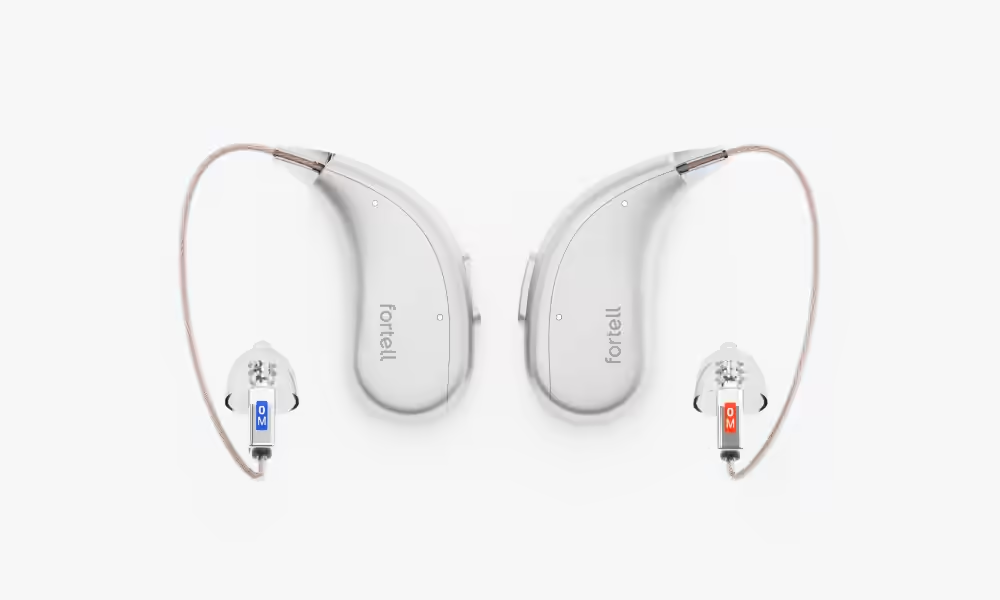
Fortell Audiology includes this testing in its evaluations. If hearing aids are appropriate, Fortell AI Hearing Aids are designed to separate speech from background noise to then amplify the voices you want to hear while turning down background noise. A personalized fitting and trial let you assess whether it helps in your usual listening situations. Our guide to how AI hearing aids work explains the technology in more detail.
Fortell AI Hearing Aids are for prescription use by adults with hearing loss and available in the U.S. only.
When conversations become harder to follow, you may start avoiding noisy restaurants, letting a partner take phone calls, or nodding along instead of joining in. Over time, those changes can leave you feeling less connected to friends and family. The World Health Organization (WHO) identifies social isolation and loneliness among the effects of unaddressed hearing loss.
Hearing health also matters for cognitive health. The 2024 Lancet Commission on dementia prevention includes hearing loss among 14 potentially modifiable risk factors for dementia. WHO’s updated dementia risk-reduction guidance states that hearing aids may be offered as part of a broader risk-reduction strategy.
Addressing hearing changes gives you an opportunity to make everyday conversations easier and stay involved in activities you enjoy. Hearing aids do not guarantee protection against dementia, but hearing care can be one part of looking after your overall health. Our guide to hearing loss and cognitive decline explores the research in more detail.
Not sure if what you’re experiencing is hearing loss? A comprehensive evaluation with a Fortell audiologist gives you a clear answer.
If conversations have become harder to follow or listening feels more tiring, a hearing test can help you understand what has changed. You don’t need to know whether you need hearing aids before making an appointment. An audiologist can assess your hearing, explain the results, and discuss the next steps with you.
Start by booking a comprehensive hearing evaluation with an audiologist. You don’t need to complete an online test or screening first. When booking, mention the difficulties you’ve noticed, especially if you hear comfortably in quiet but struggle in restaurants or group conversations.
Before your visit, think of a few situations you would like to feel easier. Bring a list of your medications and any previous hearing-test results, if available. You can also invite a partner or family member to share what they’ve noticed and help you remember the discussion.
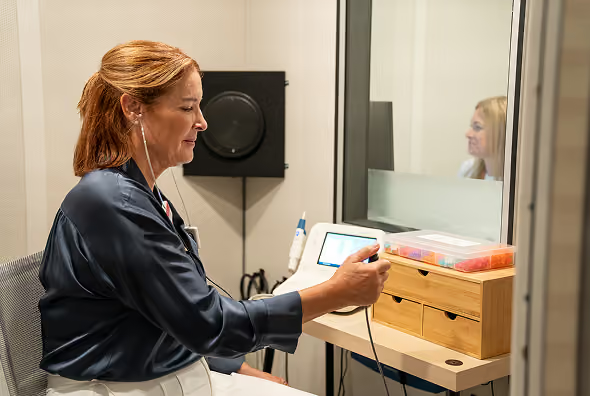
A comprehensive hearing evaluation usually includes a discussion of your hearing history, an ear examination, and tests of how you hear sounds and understand speech. The tests used can vary by clinic and your needs. Here’s what each step involves, along with what you can expect at Fortell:
At Fortell Audiology, your appointment includes time for your audiologist to walk you through the results, answer your questions, and discuss the next step that best fits your hearing and daily life. The listening tests, including speech-in-noise testing, take less than 20 minutes, but the visit allows time for a thoughtful conversation about your options without feeling rushed.
If hearing aids are recommended and you choose to proceed, your Fortell audiologist will fit and fine-tune them so you can walk away with your new hearing aids after your first appointment. You can also step outside together to hear how they perform in everyday noise and discuss any adjustments. For a full walkthrough, read what happens during a hearing test.
“Social isolation is often the first real cost of untreated hearing loss.”

There is no single hearing-test number that determines whether you need hearing aids. Your audiologist considers your results alongside how clearly you understand speech and how hearing affects your daily life.
Your audiogram maps the softest sound you can hear at each pitch, measured in decibels hearing level (dB HL). The higher the number, the louder a sound must be before you hear it. The ranges below follow the American Speech-Language-Hearing Association’s classification:
ASHA’s scale includes slight hearing loss at 16–25 dB HL, although some clinics consider thresholds up to 25 dB HL within normal limits for adults. As our audiogram guide explains, “normal” is a wide band. Two people classified as normal-hearing can have different hearing abilities, and normal results do not necessarily mean that nothing is wrong. Difficulty following speech in background noise still deserves attention, even when your thresholds fall within normal limits.
The degree of hearing loss is only part of the picture. Speech-in-noise results and daily listening demands matter too, and so does the type of hearing loss: sensorineural hearing loss, which involves the inner ear, is typically treated with hearing aids, while some other types of hearing loss respond to other medical treatment. As Fortell audiologist Dr. Kathleen Wallace explains, a common benchmark is any degree of hearing loss at 2,000 Hz or above, weighed alongside speech-in-noise scores and the daily-life questionnaire. An audiologist determines whether hearing aids fit both your results and your daily life.
Fortell AI Hearing Aids are designed for adults with mild to severe hearing loss, and a consultation with an audiologist confirms whether they are right for you.
Hearing aids come in two broad categories, and some people need other treatments altogether.
The FDA created the over-the-counter (OTC) hearing aid category for adults 18 and older with perceived mild to moderate hearing loss. You can buy OTC hearing aids without an exam or prescription and set them up yourself. They aren’t intended for severe hearing loss, for children, or for anyone with the warning signs listed in the doctor section of this guide.
Prescription hearing aids can serve the full range of hearing loss, from mild to profound. An audiologist programs them to your audiogram, follows up with adjustments as you get used to them, and typically offers a trial period. Fortell offers a 100-day trial so you can test your hearing aids at restaurants, gatherings, and busy streets.
An otolaryngologist treats medical causes of hearing loss, such as an ear infection or a blockage. For severe to profound hearing loss, when hearing aids no longer provide enough clarity, a cochlear implant may be an option.
If you already wear hearing aids and still struggle in background noise, treat that as a signal too, and ask for an updated evaluation. Our guides to hearing aid styles and how long hearing aids last can help you compare options.
Not sure what type of hearing aid is best for you? Start with an evaluation from an audiologist who will assess your hearing profile and lifestyle to give you a balanced recommendation.
Deciding when to get hearing aids rarely comes down to a single moment. It starts with small signs, like a missed punchline or a tiring dinner, and moves through a screening, a full evaluation, and a conversation with an audiologist about the right care path for your hearing and your life.
If listening has started to feel like work, a comprehensive hearing evaluation gives you a clear picture of what comes next. Modern hearing care can go beyond making sound louder and focus on helping speech stand out from background noise. Take Fortell’s eligibility quiz to book your evaluation, find a Fortell Audiology location near you, or read patient stories from people who took the same first step.